Making Garlic Bread With Jack...
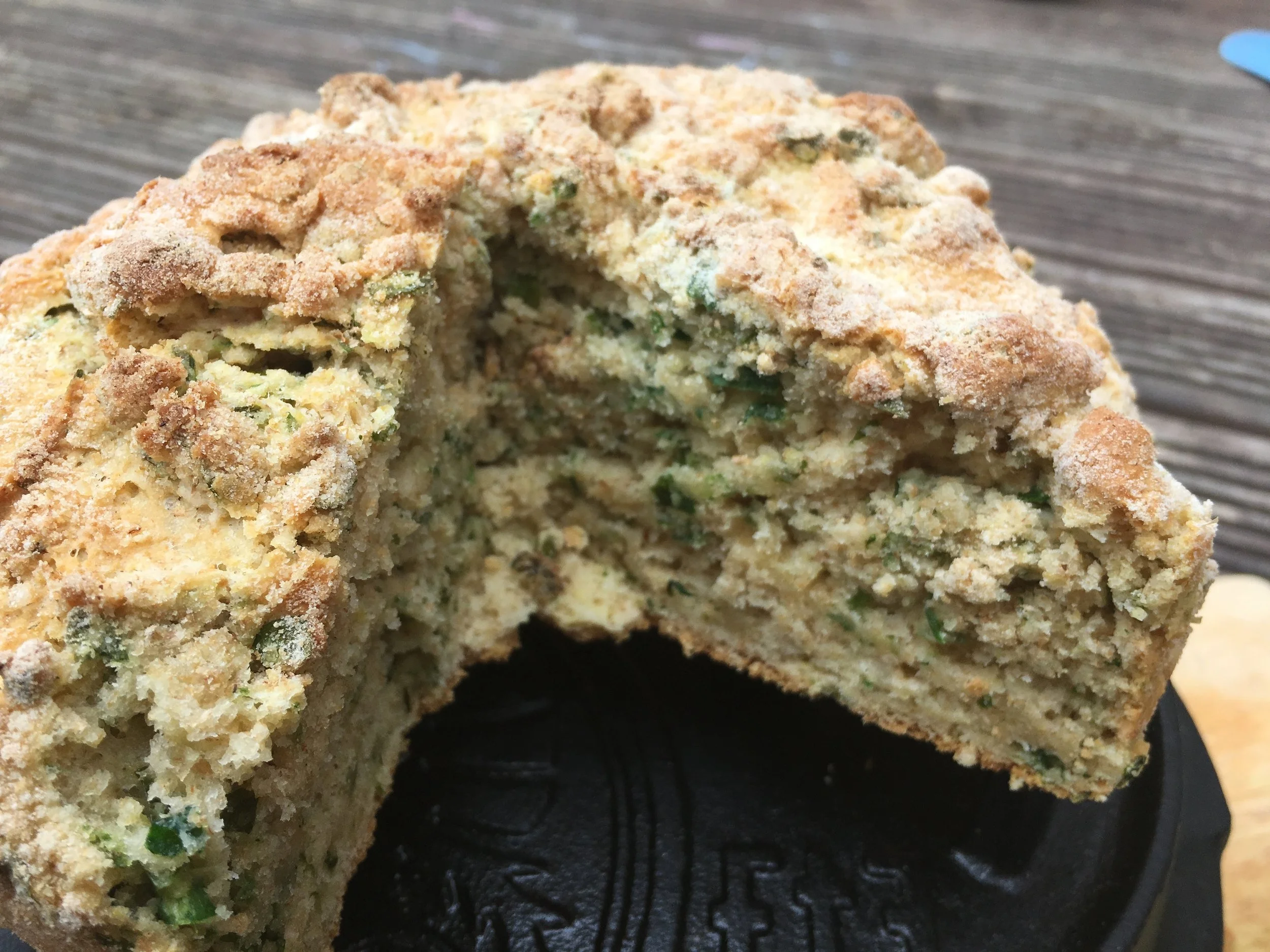
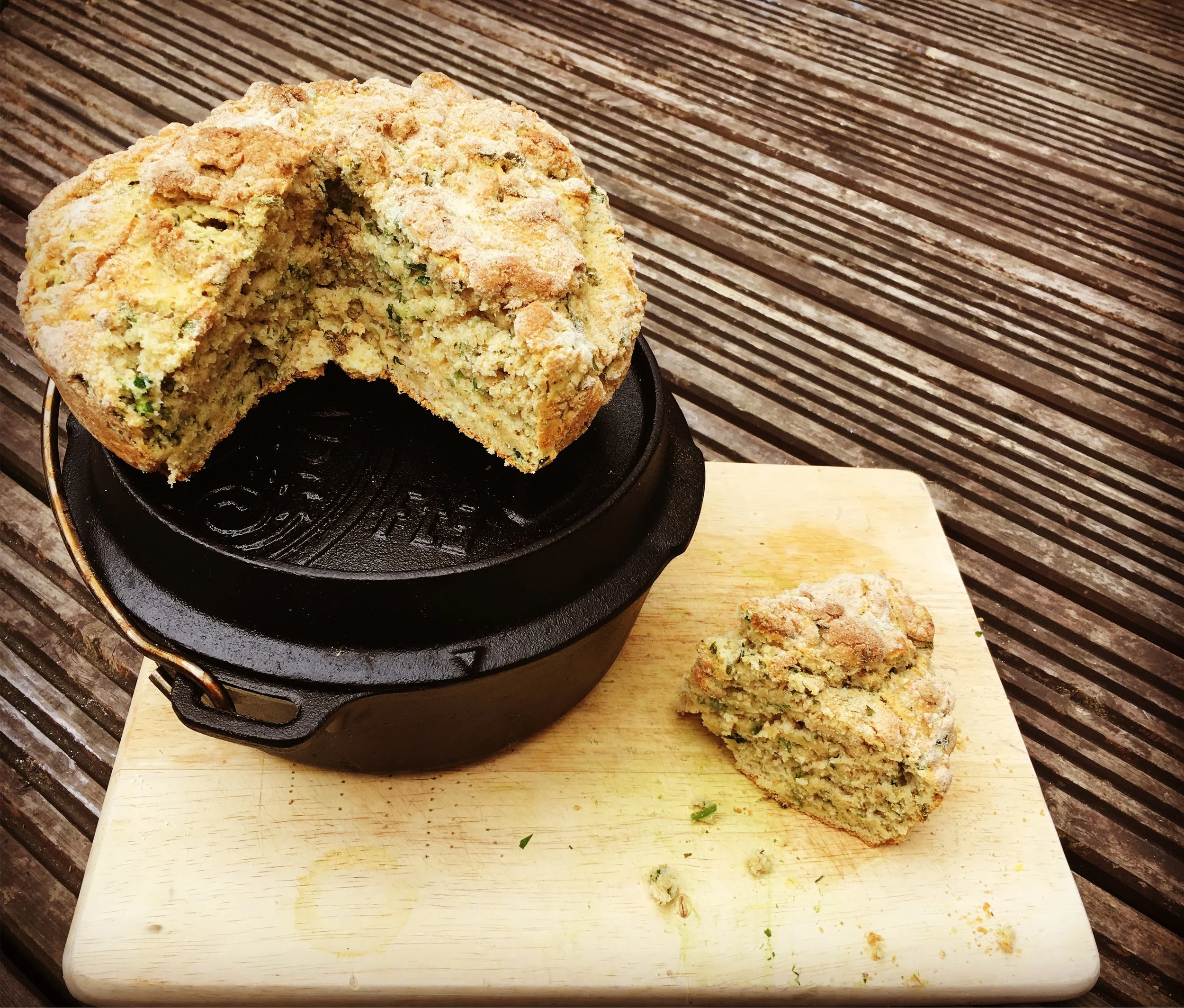
This time of year is an excellent time to begin an interest in foraging for wild food. I generally dip into natures larder to augment what's in the cupboards at home, and today I wanted to share a simple recipe for a garlic bread. Using three home ingredients and two foraged from a walk in the woods with my kids this morning, we'll smash out a amazing rustic loaf in about 30 minutes.
For the home portion you'll need around 6-8 handfuls of plain flour, I like to use a half-and-half mix with Khorasan flour for extra texture and depth. I add to this around a half handful of baking powder. You'll also need a good lug of olive a bit later on. You can also add a pinch of salt if you wish.
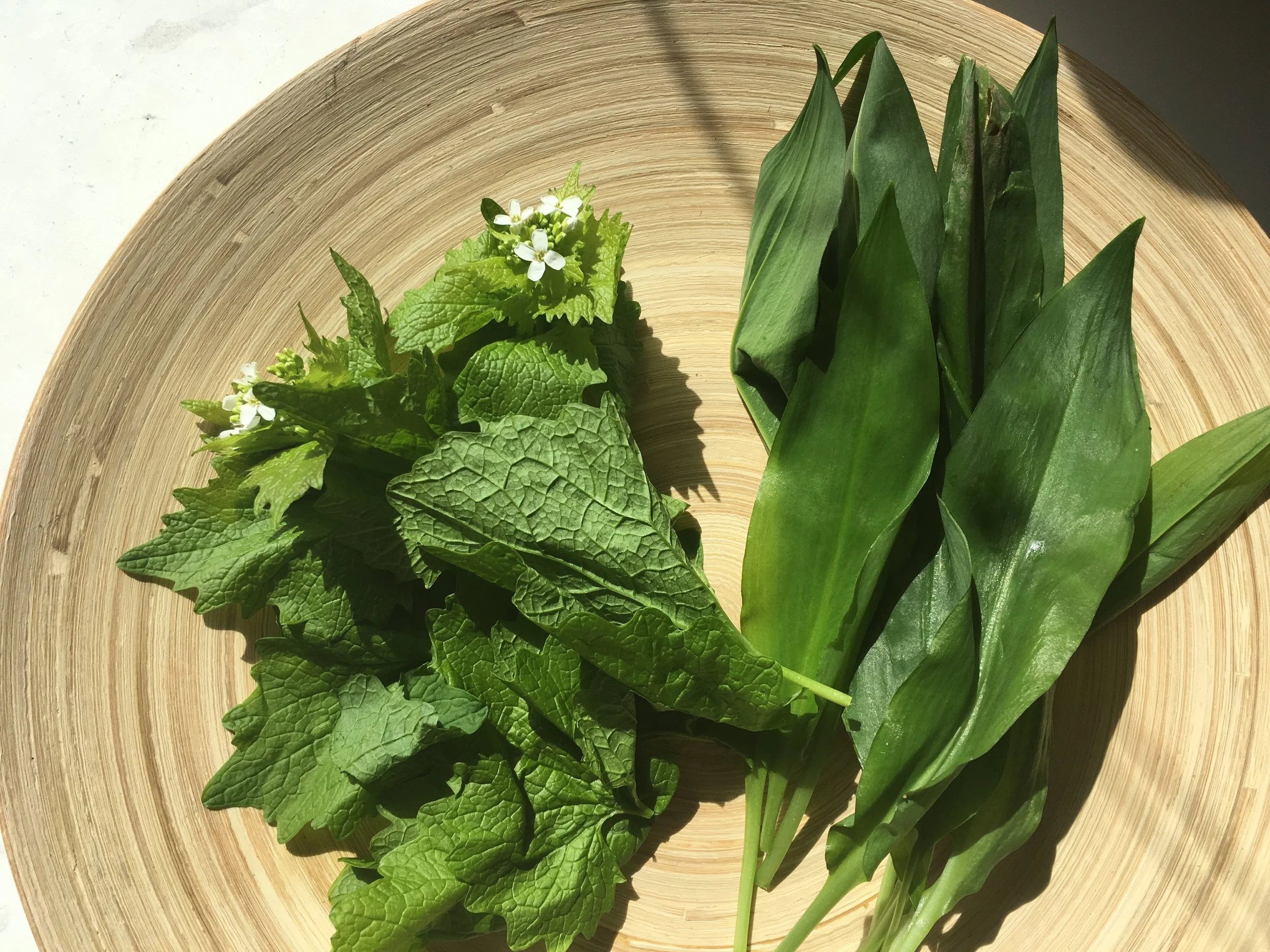
The foraged portion then: Jack by the Hedge and Ramsons.
These two greens were some of the first wild foods I was introduced to, being easy to identify and commonly available across the UK. Jack-by-the-Hedge, or Hedge Garlic as it's also known (Alliaria petiolata if you want to be fancy) is a member of the mustard/cabbage family the Brassicaceae. It's relatively easy to identify: growing up to a metre high it's heart-shaped leaves with wavy edges smell strongly of garlic when crushed. It starts growing from a basal rosette, sending up a tall stemmed which flowers with tiny white petals. Later in the year the seeds of Alliaria petiolata are an excellent mustard favour.
Ramsons are a favourite to beginners in wild foods, as they are not easily mistaken for many plants especially when you smell the leaves. Allium ursinum, wild garlic or woods garlic as they're known smell strongly of garlic-come-spring-onion and this is the defining feature to check against the only commonly mistaken pretender: Lily of the Valley. At this time of the year though Ramsons are coming into flower, which makes them distinctly different from any leaf lookalikes.
As a point of self preservation: I positively identify EACH plant I pick, as with Ransoms when they grow in vast patches, it's all too easy to relax into thinking that's all that's growing within the patch.
To make the bread...
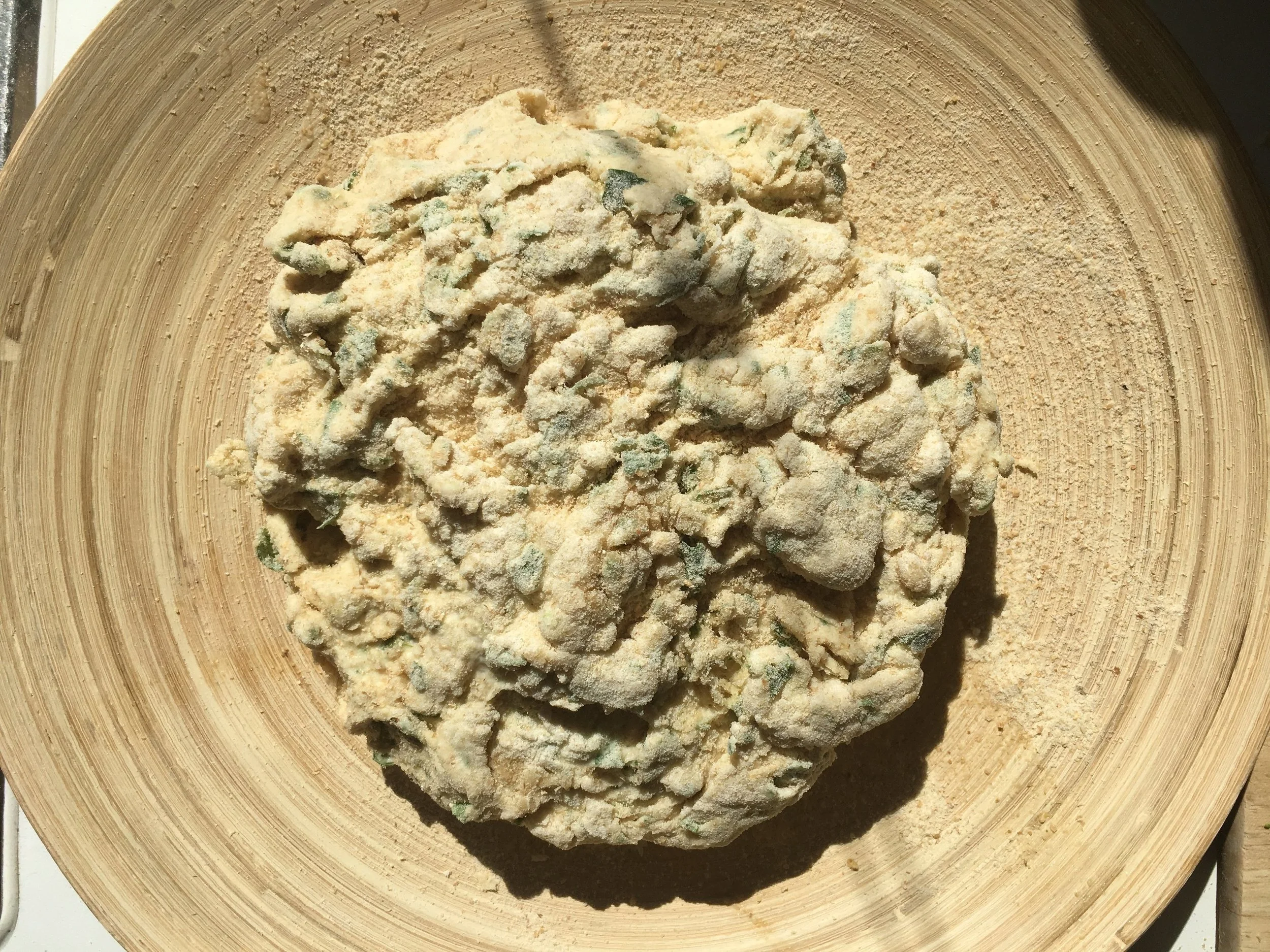
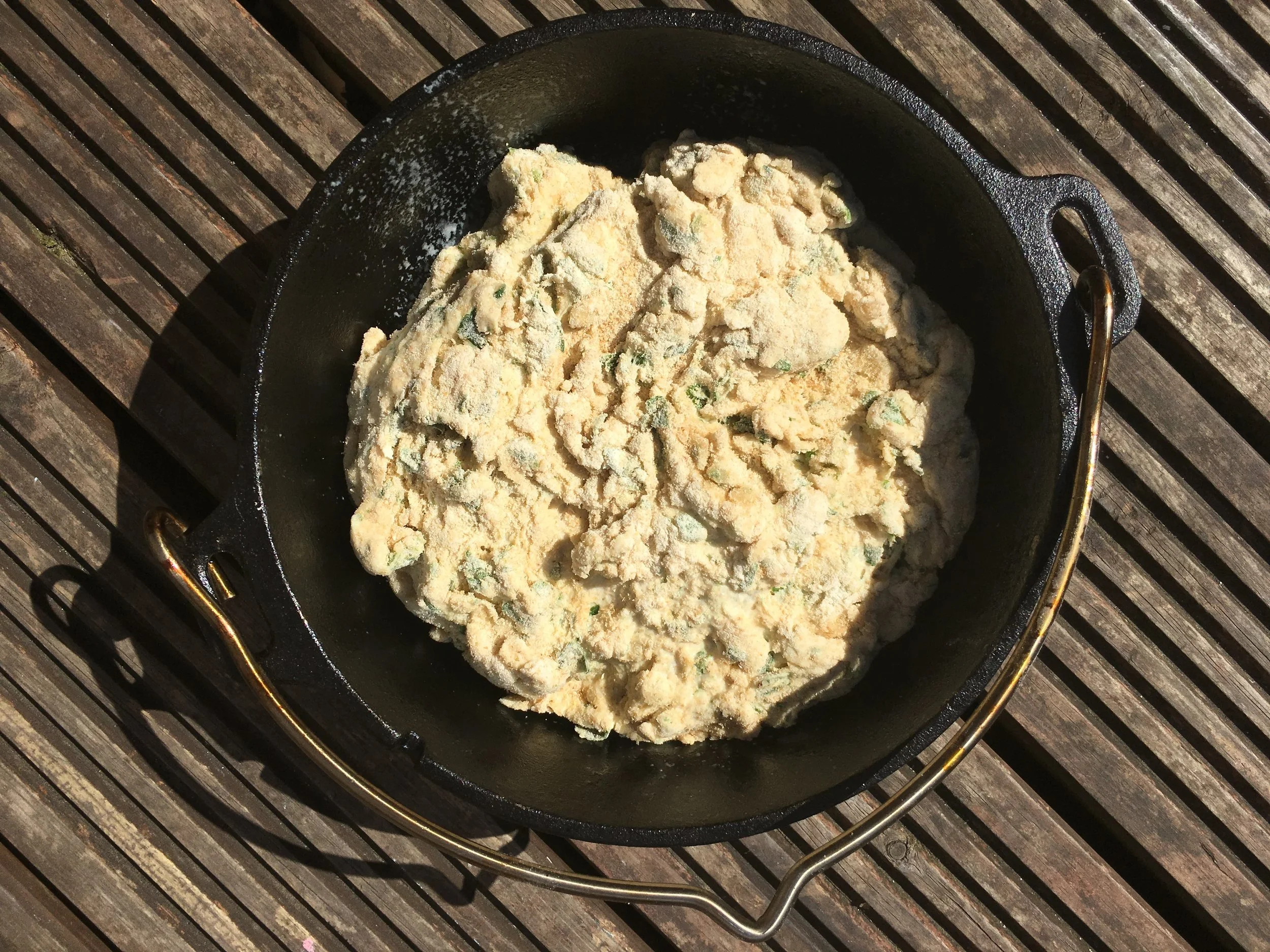
At home, preheat the oven to 200C. I thoroughly wash the wild greens and leave them to strain. In a large bowl add your flour, salt and baking powder together. Mix them well to aerate them. Finely chop the greens and add them to the dry ingredients, mix well. Then add the olive oil, and enough water to get the mix to stay together as a dough. This should be done gently, but quickly as extra time spent mixing will punch the air out of the dough. Once you have a simple sticky dough dust it liberally with more flour to allow you to pick it up.
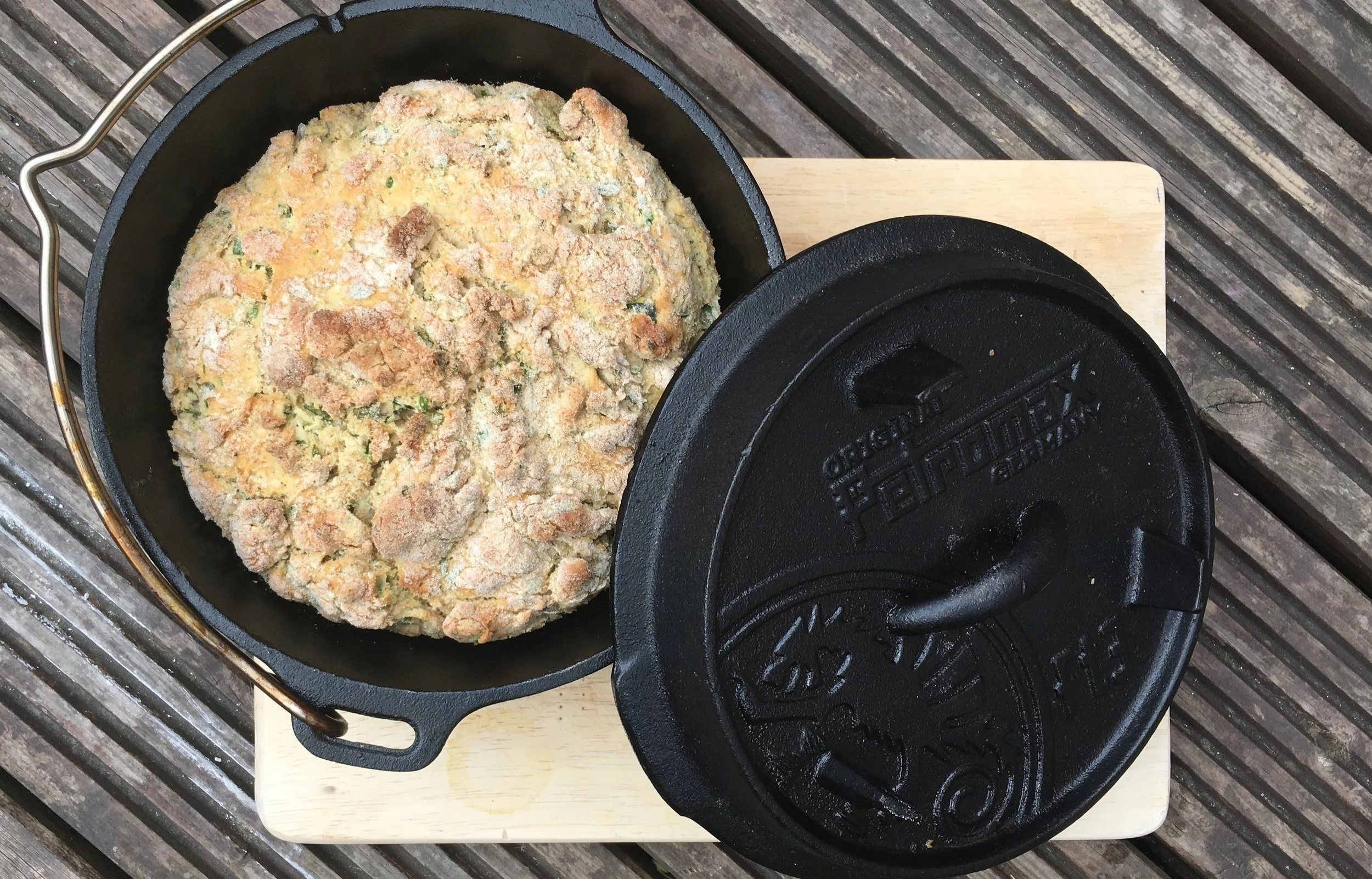
Place the dough into a pot and cook for roughly 25 minutes, until golden brown and cooked through.