bushcraft as language
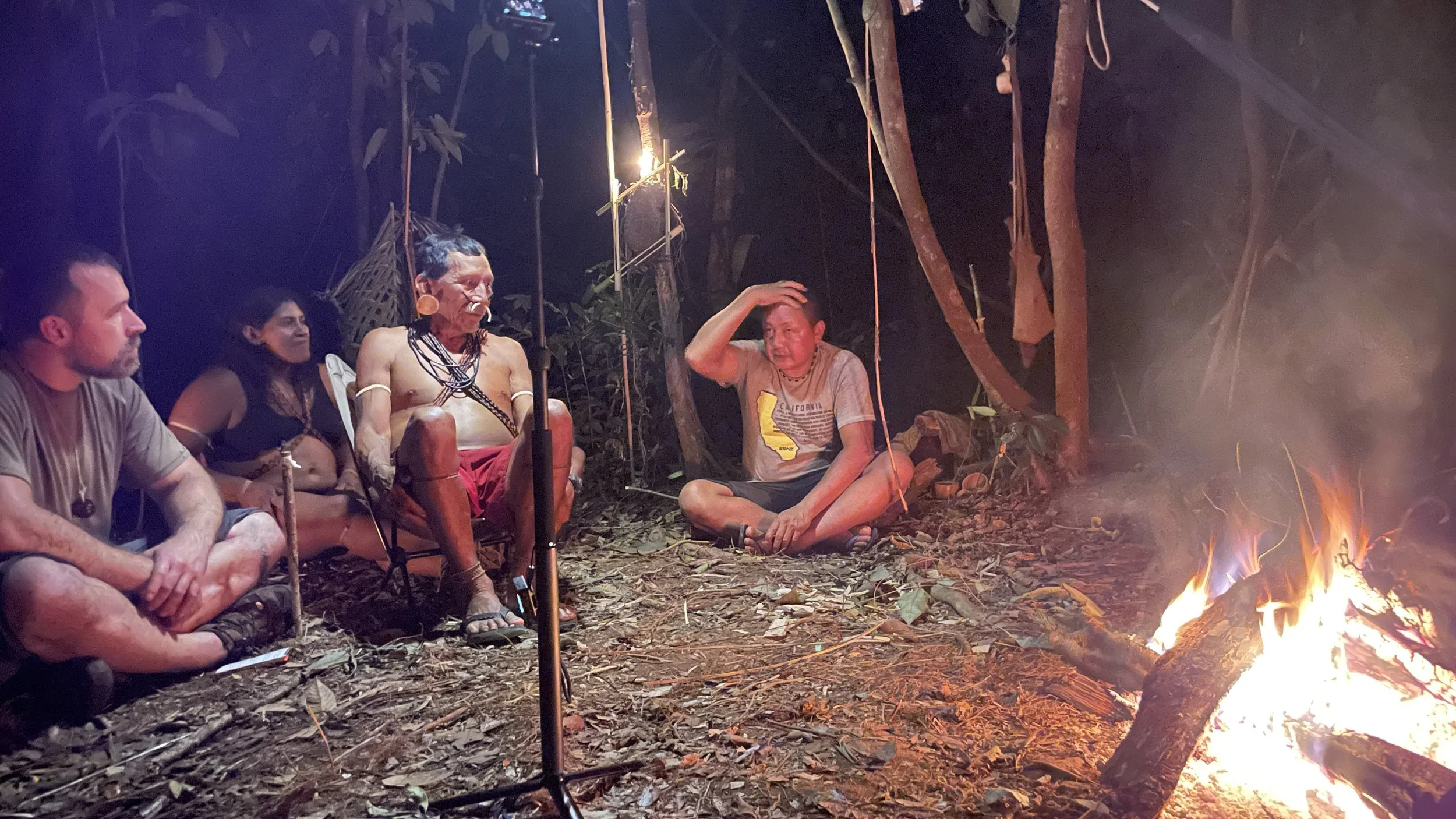
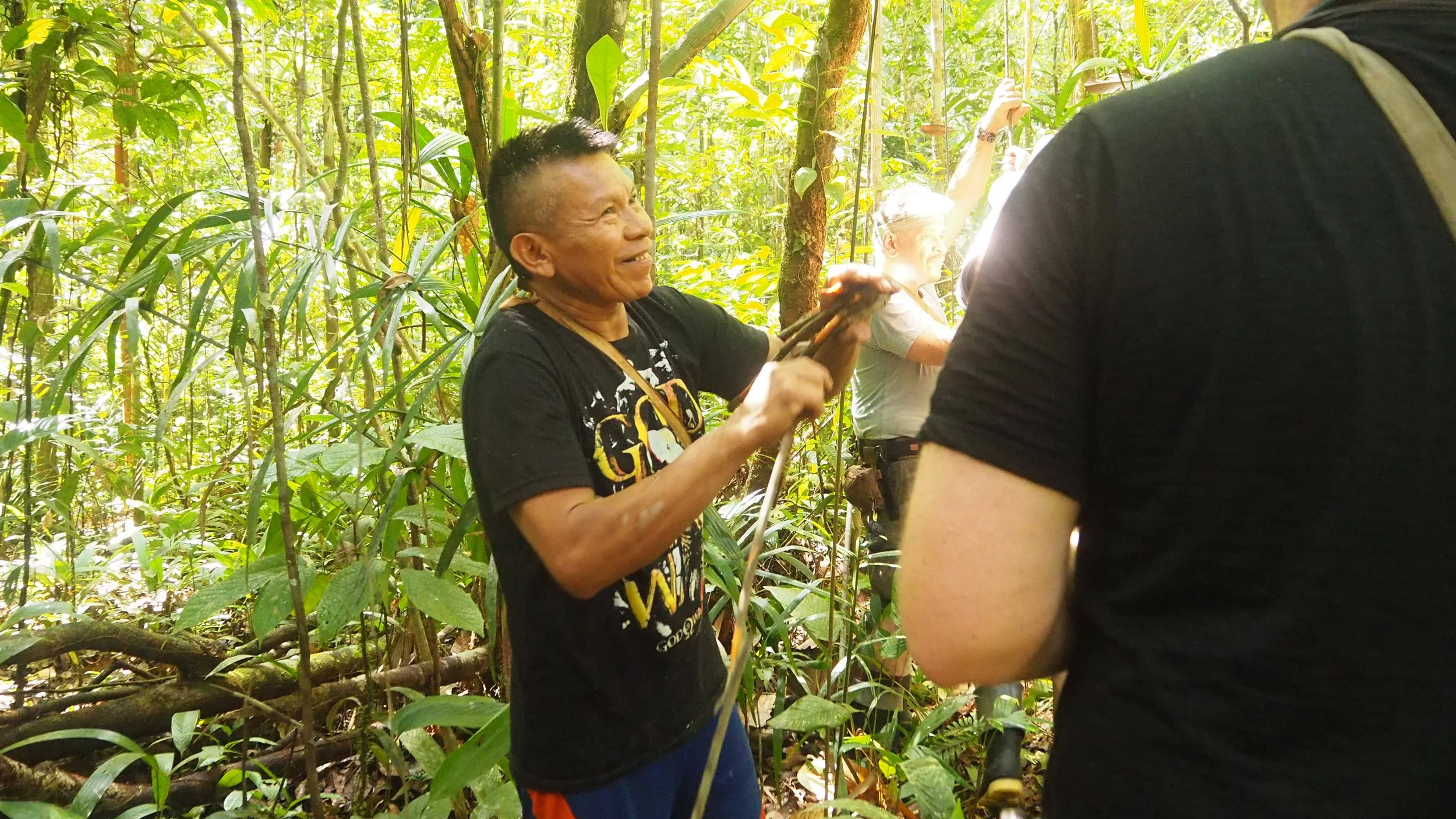
I didn’t understand the words he was saying, but I understood the assignment: split the vine in half to make a stronger lashing. As I cracked on using a technique I’d honed back home working with spruce roots, leaning the thicker side over to true up the split and keep it centred, Alberto recognised both my understanding of plant fibre and a well-used bushcraft technique. In that moment, bushcraft was our shared language.
This was my first experience working in the field with someone I didn’t share a spoken language with, and in just happened to be in the Amazon Jungle.
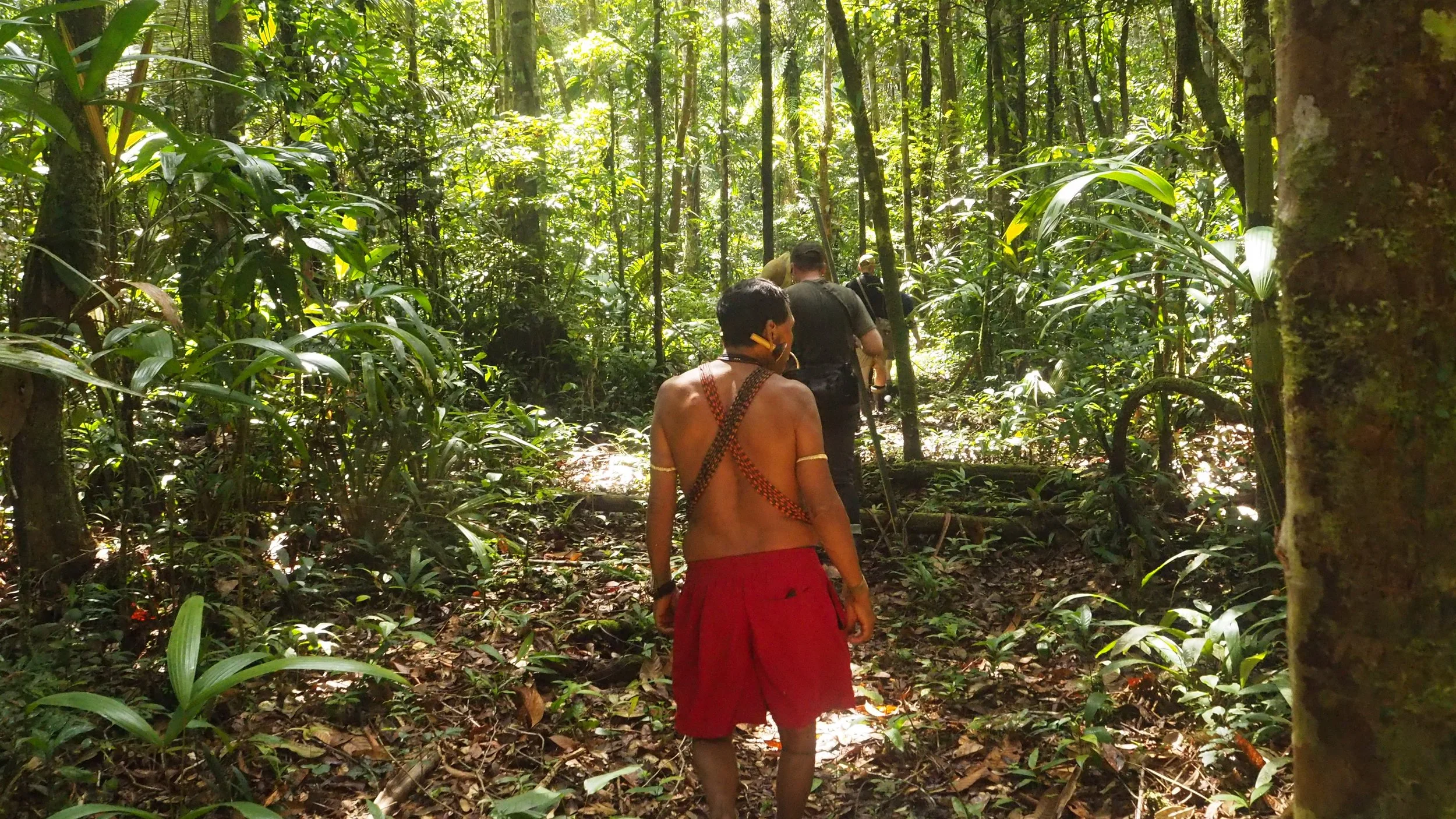
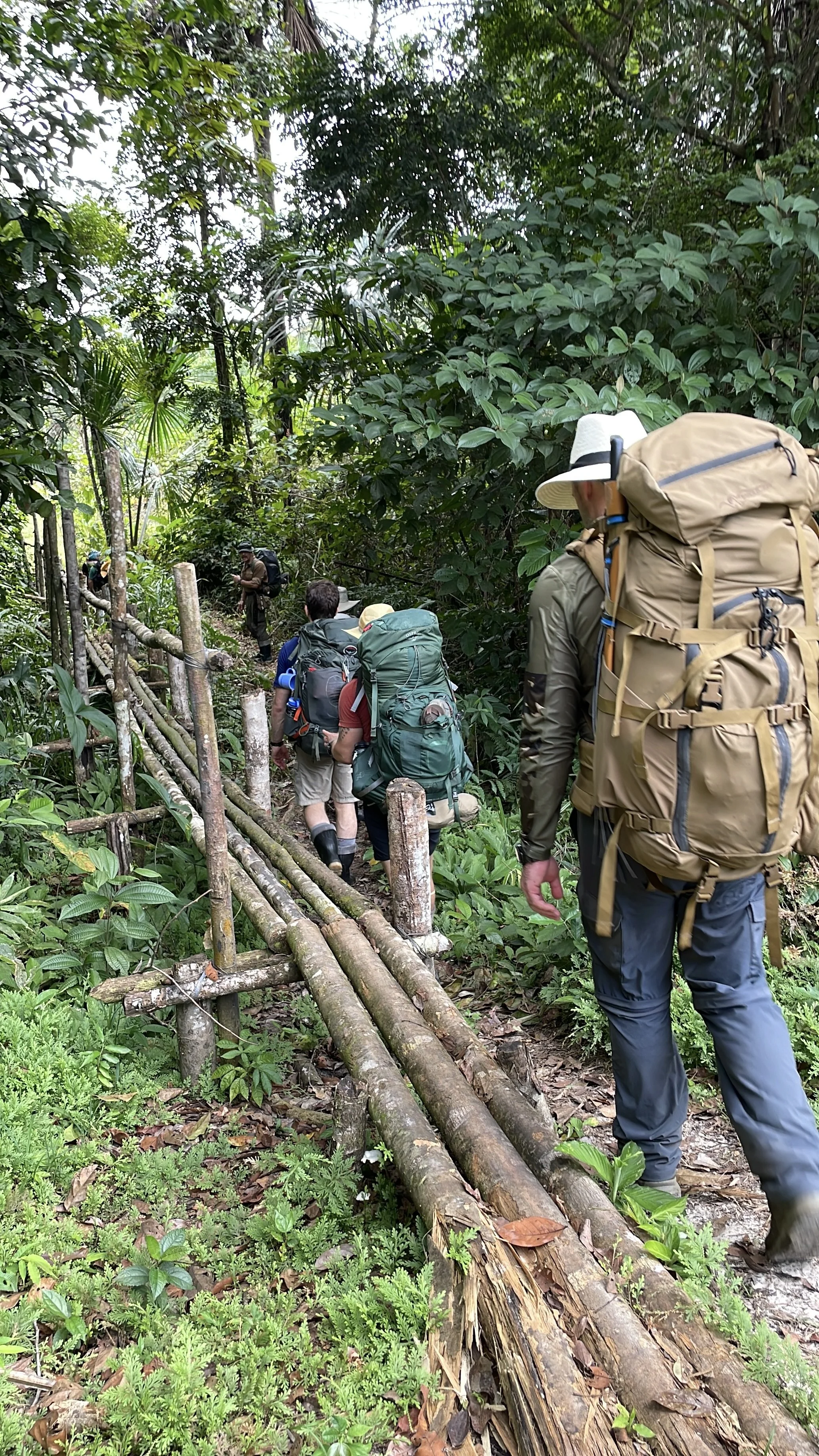
I had joined an expedition led by Bushcraft Global as a supporting instructor alongside expedition leader Peter Magnin. While assisting Peter on what was effectively an immersive bushcraft course in one of the most extreme environments on Earth, my personal goals were simple: to have a raw, honest experience in a landscape completely new to me, and to meet indigenous guides with an open mind, ready to learn anything they were excited to share.
One of my main concerns before the trip was communication. I hoped I’d be able to work on bushcraft and woodcraft projects with the local guides without relying entirely on the generous translations of others. The main language barrier was Spanish to English, but the Matses tribe members who accompanied us into the jungle spoke only Matses: a beautifully delicate language, reminiscent of the warbling of doves.
As we arrived at the location chosen for our basecamp, the practical realities of expedition life took over. Tarps and hammocks needed erecting, machete-cleared areas prepared, fires lit, and water hung for filtration. Because we would be staying for a full week, we also built a jetty and bathing platform in the creek for collecting water, as well as a large table and benches for communal meals.
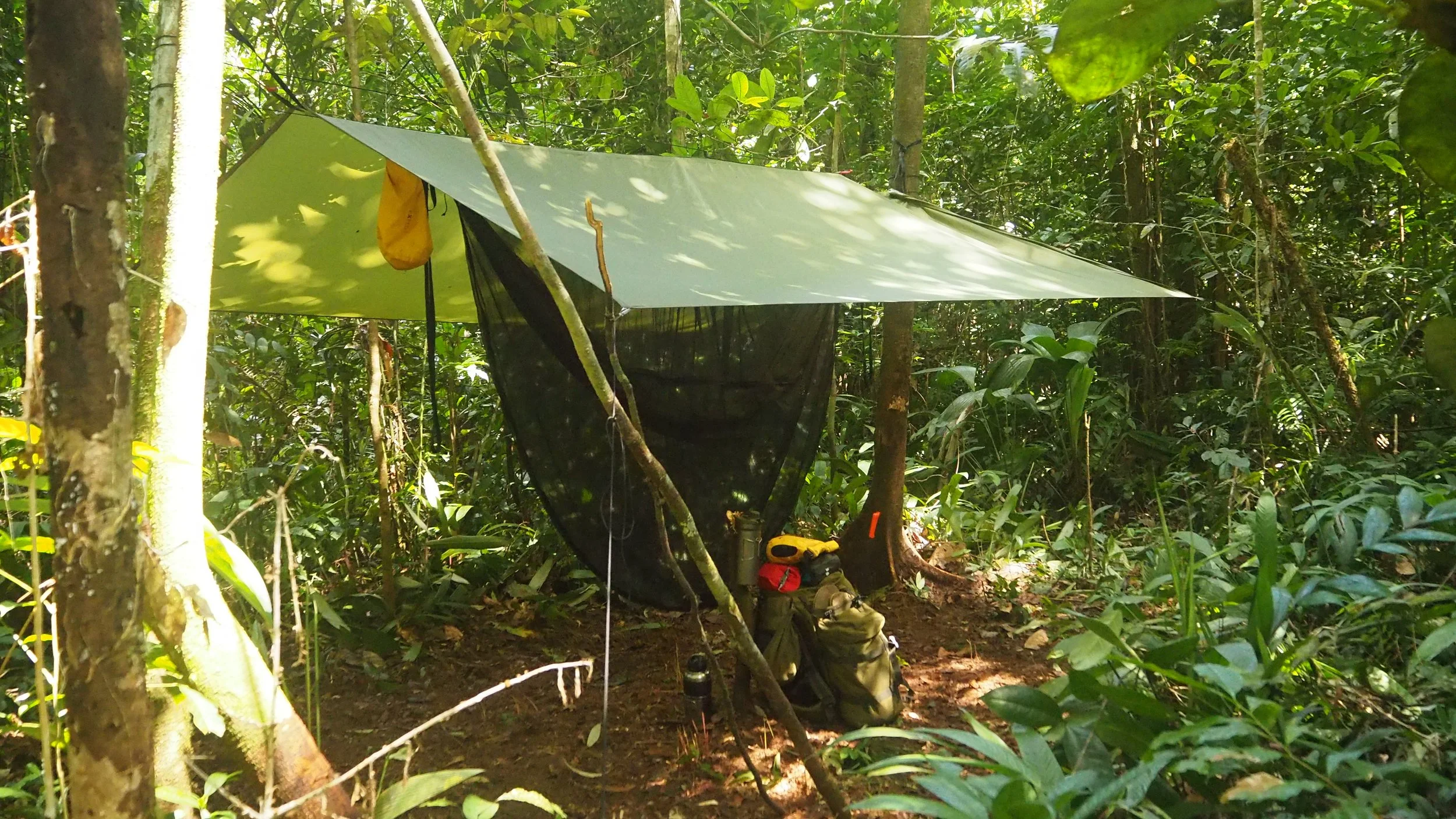
These early camp builds became our first real opportunities to work alongside our indigenous guides. A rapport formed quickly, primarily through observation: watching how Alberto, Victor, and Quinee worked, then mirroring their methods. It must have been clear to them that our group understood what we would call bushcraft, not just tool use, but lashing techniques, reading wood grain, understanding material tolerances, and working confidently with natural fibres.
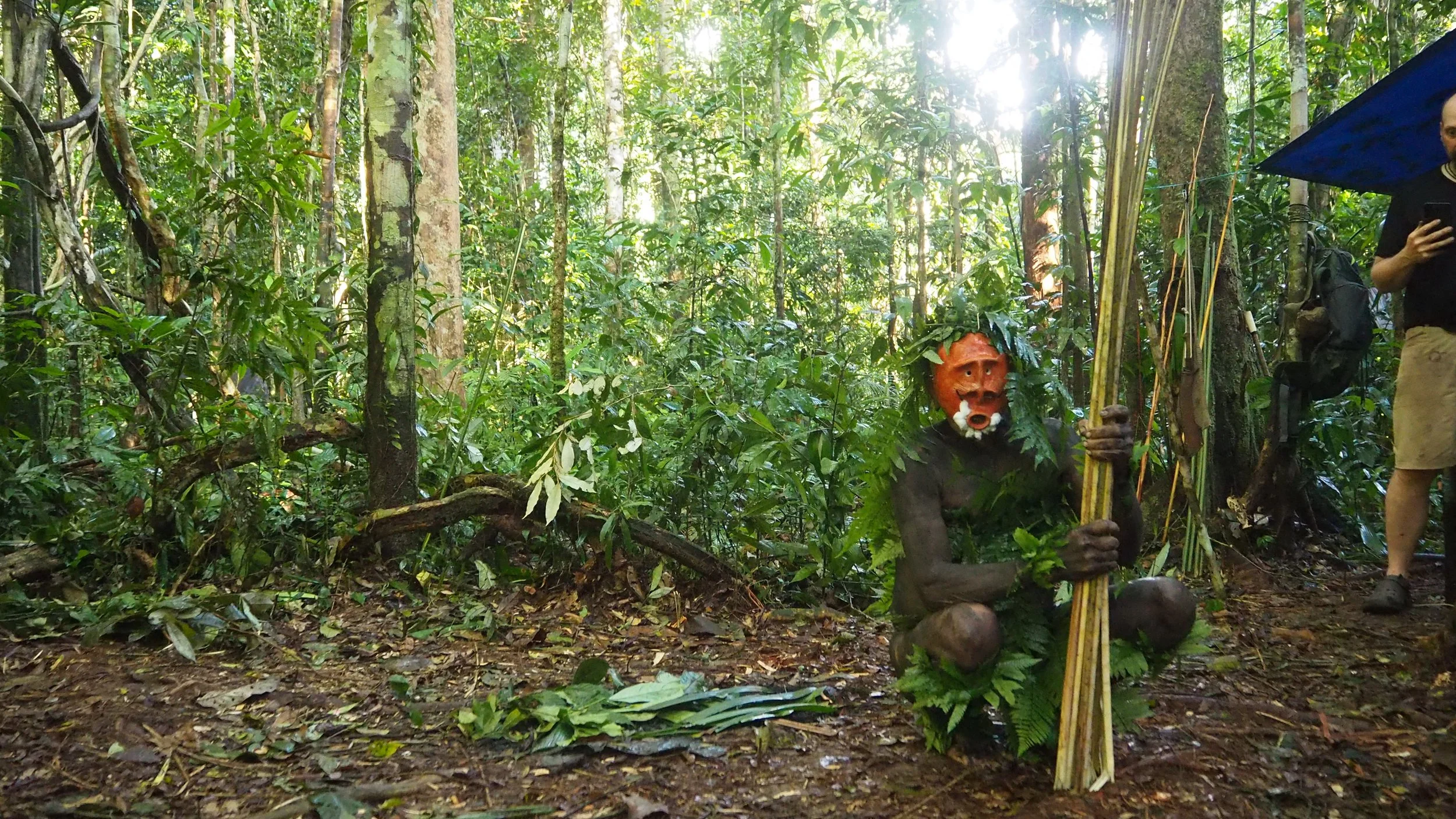
Everyone in the group had a solid foundation in bushcraft, and together we seemed to contrast with previous groups our guides had worked with. We were capable, willing, and genuinely keen to learn from them, contributing meaningfully to camp life and shared projects. This mutual respect laid the groundwork for real connection.
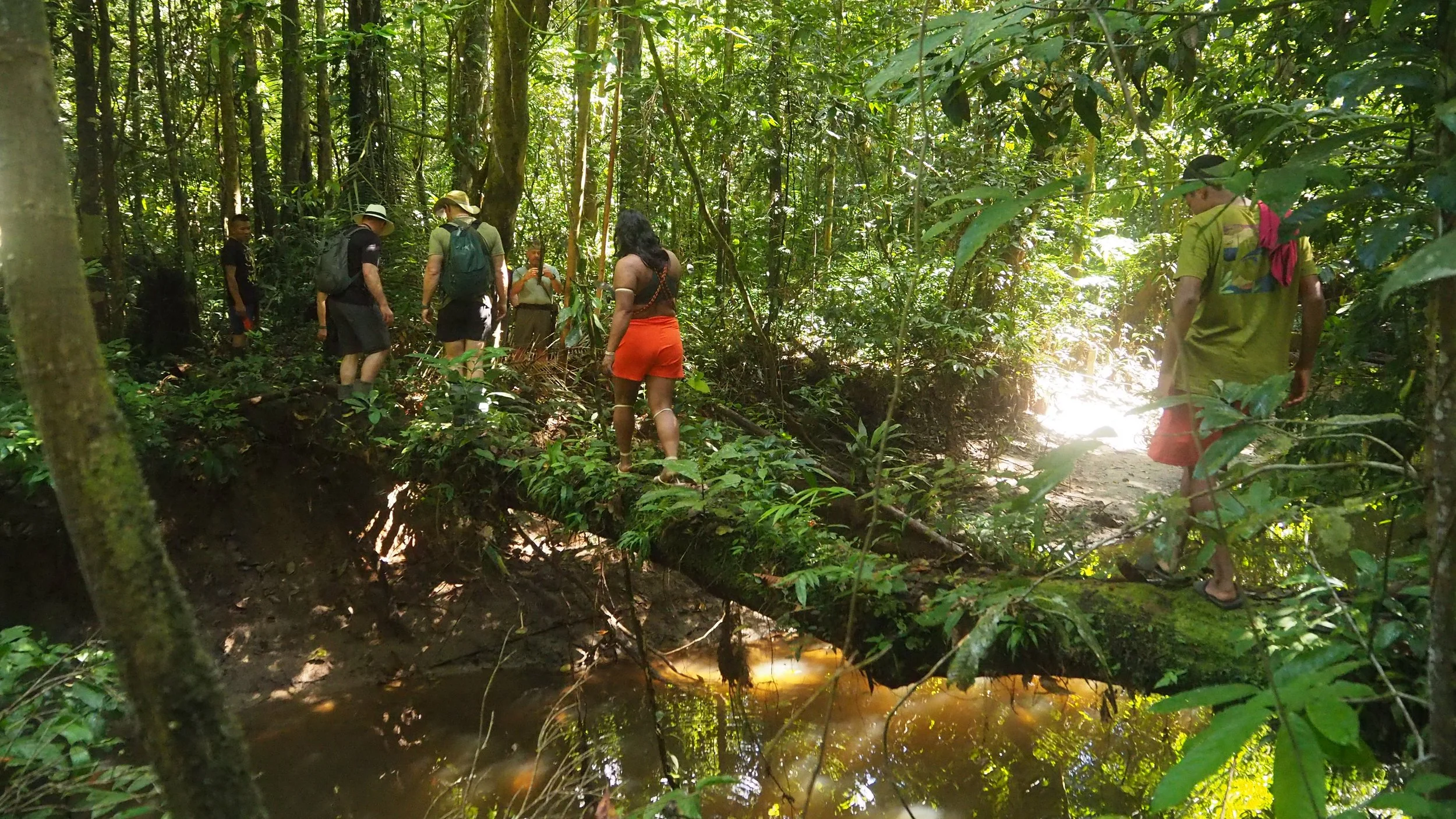
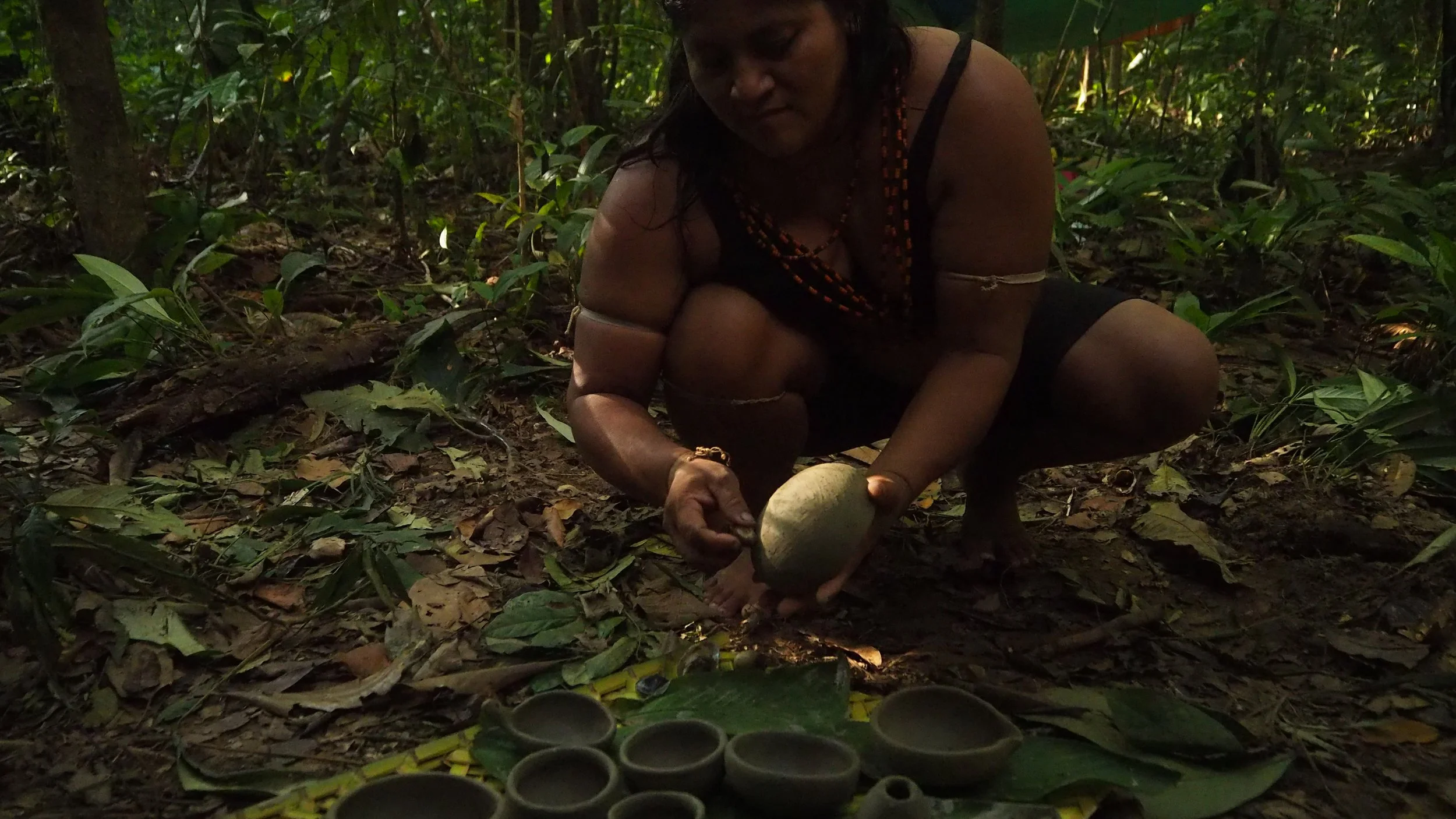
The more we demonstrated our willingness to learn and our shared bushcraft skillset, the more our working relationship evolved into friendship. Our “conversations” rarely extended beyond woodcraft, tree and plant identification, or medicinal and craft uses, but bushcraft itself became the language. While working with Tupa as she taught us to make pottery from Amazonian clay, we communicated through pressure of fingers, the smoothness of shells, and the shape of bowls forming in our hands. Words were useless; a nod or mirrored movement said everything.
One of the most meaningful moments of the entire Amazon jungle trip came toward the end of the expedition. I wanted to make a couple of bows for my children back home and gestured to Alberto for help. With a mix of hand signals and my embarrassingly limited vocabulary “niños” he smiled and led me on a short walk to find a suitable sapling.
I’d seen small fishing bows used throughout the jungle and thought they’d be perfect for my kids. As we walked, Alberto asked through gestures about their ages and heights. He had children too. As fathers, we made bows together: reading the grain, testing the tiller, twinning bowstrings. Few words were spoken, yet it remains one of the best conversations of my life.
I’m often asked on bushcraft courses I lead in the UK, “What does bushcraft mean?” While that question probably deserves an article of its own, I found part of the answer deep in the Amazon. Bushcraft became a bridge an ancient, human connection rooted in respect for natural materials, in working humbly with the Earth’s fibres, and in learning through hands, feet, and quiet attention.
By moving slowly in the footsteps of those who came before us, bushcraft doesn’t just teach skills: it draws us closer into the forest, and closer to each other.