Bushcraft, Science, & Reality: Why Direct Experience Matters
Bushcraft offers something increasingly rare in modern life: direct encounter. In the woods, reality arrives through the hands; the real world is grit under the nails, the ribboned grain of sycamore timber grown under tension cannot faithfully be described or theorised, you gotta touch that wood man! Feel the fibres to know it. One learns the weather through cool skin on summited mountains, woodcraft through resistance in the grain, miles are measured in fatigue.
This is one reason why bushcraft courses and wilderness expeditions continue to grow in popularity across the UK. More people are seeking practical outdoor skills, primitive fire lighting, woodland survival knowledge, and visceral experiences that reconnect them with the natural world beyond screens and abstraction.
Bushcraft is a mode of living and learning rooted in haptics, immediacy, and sensory feedback; almost a form of “hand-to-mouth” epistemology.
This is part of bushcraft’s enduring appeal. The practitioner becomes reacquainted with cause and effect at a human scale. A poorly tied knot fails immediately. Damp tinder refuses to ignite. Hunger sharpens judgement; cold feet are the reward for poor preparation. Such experiences cultivate attentiveness, humility, and competence in ways difficult to reproduce in heavily mediated environments.
Many outdoor practitioners describe this as feeling more “real” than everyday urban life, and there is truth in that intuition. Bushcraft reconnects us with embodied knowledge that industrial society often suppresses.
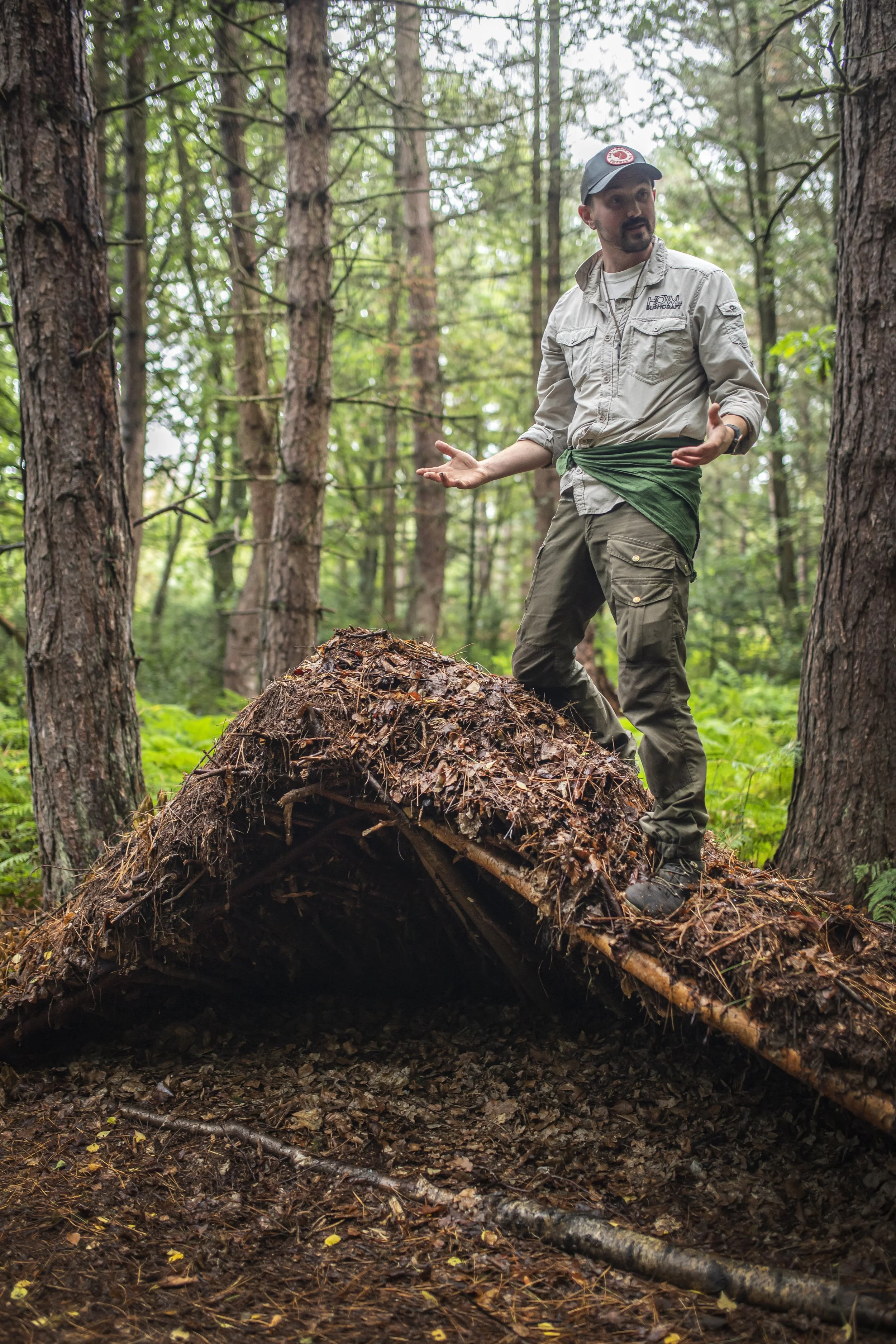
If you are interested in developing these skills yourself, our Bushcraft Courses and Adventure Expeditions are designed to steep people in practical wilderness living, firecraft, navigation, campcraft, and remote travel skills through direct experience.
Yet there is also a danger in mistaking visceral experience for complete understanding.
Human beings evolved to navigate environments at the scale of direct perception. Our senses are excellent at identifying patterns relevant to survival, but they reveal only a narrow band of reality. The natural world contains processes entirely inaccessible to intuition: microbial ecologies, atmospheric chemistry, electromagnetic radiation, genetics, and geological timescales far beyond immediate sensory awareness.
Much of what drives change in nature cannot be seen, felt, or experienced directly.
Bushcraft culture can occasionally drift into a romantic empiricism: the belief that what feels authentic must therefore be true. Practical knowledge gained outdoors is invaluable, but practical success alone does not always produce accurate explanations. One can become deeply competent within a landscape while remaining scientifically naïve about the larger structures governing that environment.
This can lead us into believing false facts, and falling into wishful thinking when, in times of desperation, the best course of action is shielded behind a mist of misunderstanding.
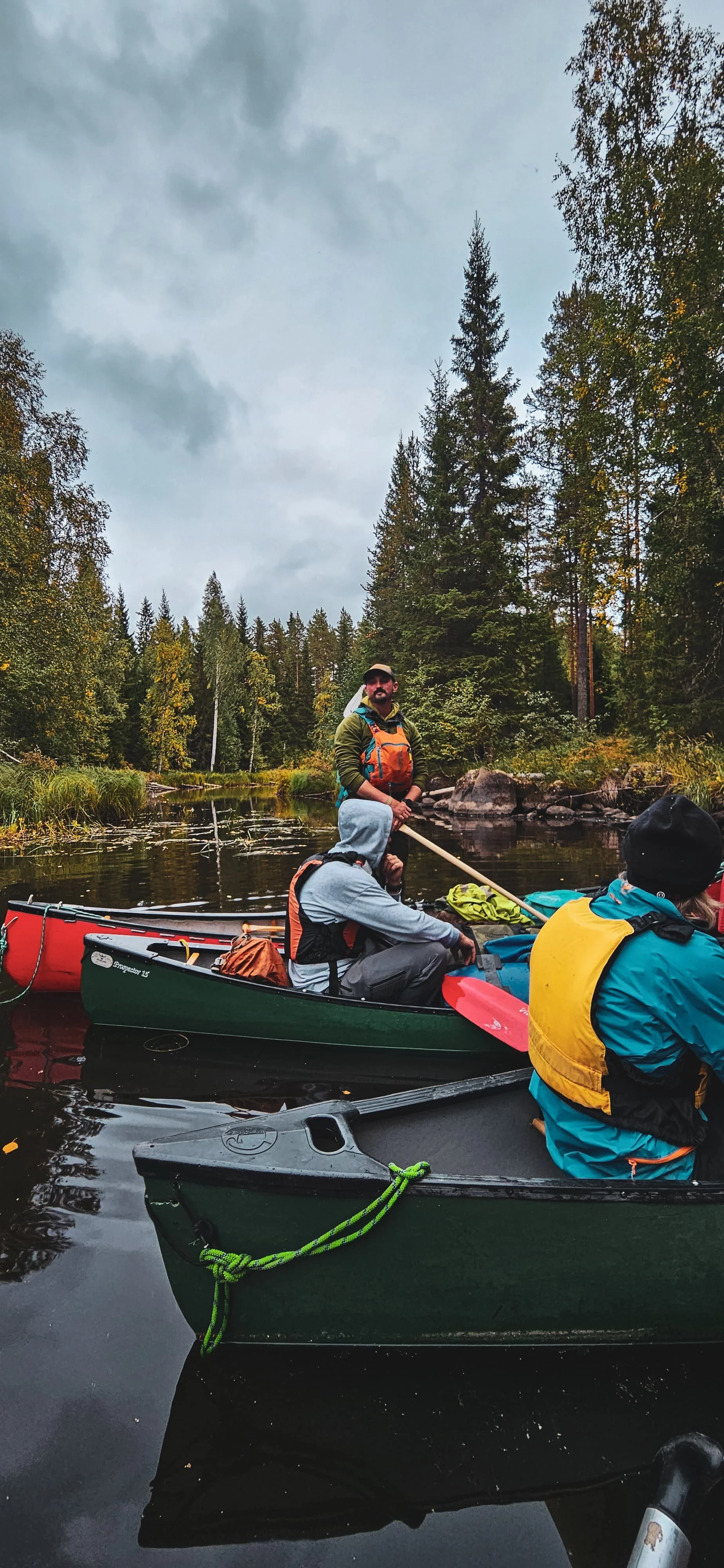
The challenge, then, is not to abandon visceral engagement but to complement it. Bushcraft is at its strongest when lived experience and scientific enquiry reinforce one another. The tactile knowledge of friction fire lighting becomes richer when paired with combustion chemistry. Animal tracking gains depth through ecology and evolutionary biology. The study of medicinal plants and wild foods becomes far more powerful when supported by peer-reviewed research and evidence-based understanding.
This is especially relevant within modern foraging courses and herbal medicine education. As interest in wild food, medicinal plants, and traditional woodland knowledge grows, it becomes increasingly important to separate evidence-based practice from romantic mythology.
For many bushcraft practitioners, herbal medicine represents one of the clearest expressions of direct, embodied knowledge. Plants are not encountered as abstract compounds or pharmaceutical products, but as living presences within a landscape: smelled in the rain, prepared by hand over fire, or infused in simple teas and tinctures.
The knowledge feels intimate because it emerges through repeated sensory engagement with the natural world.
A person learns not merely about a plant, but develops a relationship with it through touch, observation, seasonality, and effect. This intimacy explains why traditional remedies carry such enduring authority. They arise from accumulated human experience across generations.
In many cases, that experience corresponds to genuine biochemical efficacy.
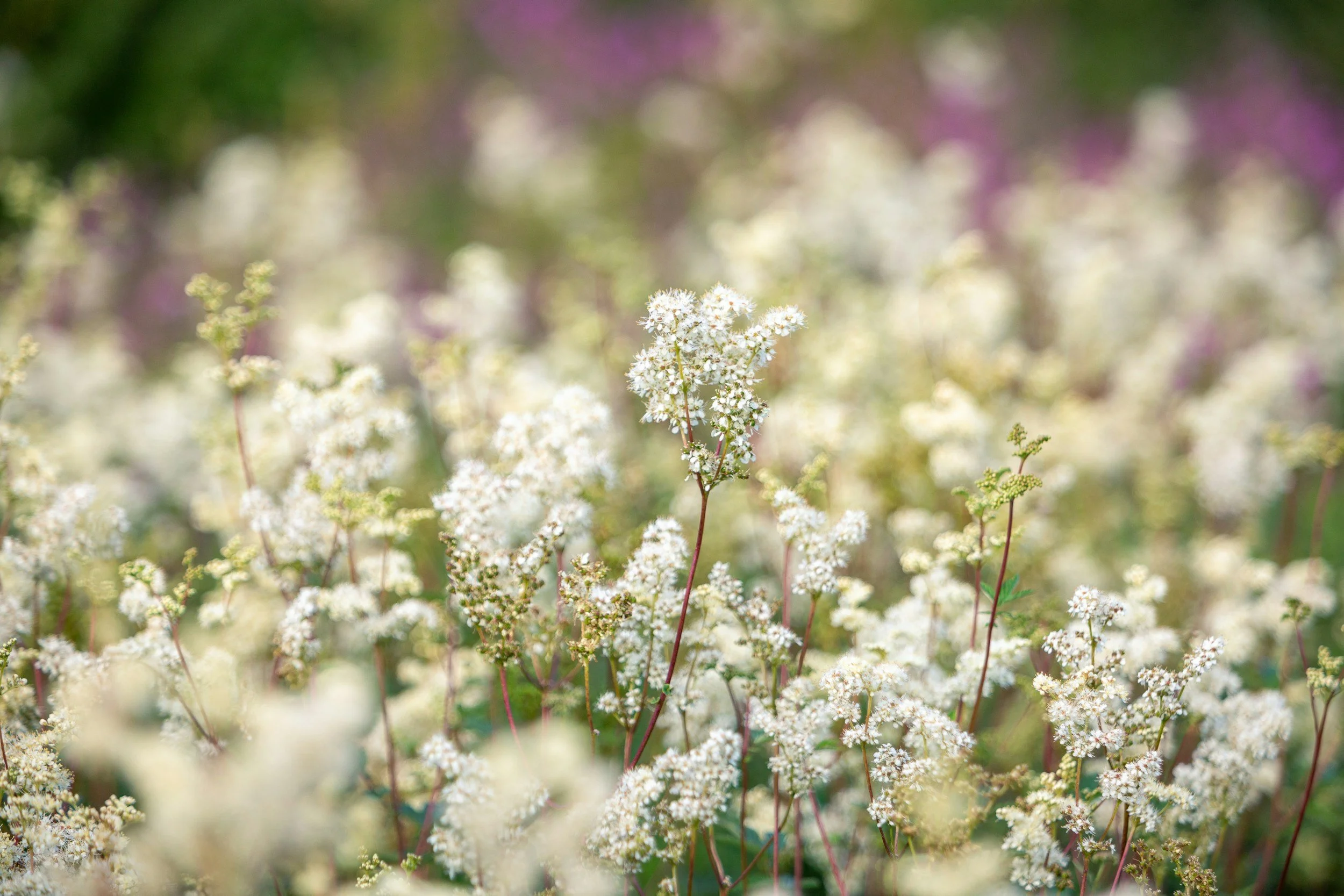
Meadowsweet (Filipendula ulmaria) is a strong example. Long used traditionally to reduce pain and fever, it contains salicylate compounds related to those that later informed the development of aspirin. Here, folk practice and scientific analysis converge elegantly: empirical tradition correctly identified a plant with measurable pharmacological action.
This is something we explore practically during our Foraging Courses, where traditional plant knowledge is approached alongside ecological literacy, safe identification, and modern scientific understanding.
Such examples are important because they demonstrate that traditional knowledge should not be dismissed simply because it predates modern science. Human beings are excellent pattern recognisers. Over centuries, trial and error can produce remarkably sophisticated practical understanding.
However, this is precisely where discernment becomes essential.
The existence of effective natural compounds does not validate every surrounding belief system. Herbal traditions often evolved alongside cosmologies involving spirits, humours, sympathetic magic, or metaphysical energies unsupported by evidence.
In the modern world, this sometimes reappears in forms of “holistic” medicine that reject scientific methodology altogether, treating anecdote, intuition, or personal testimony as equivalent to controlled evidence.
The language of being “natural” is frequently used as though it were inherently synonymous with safe, effective, or true.
Yet nature itself is indifferent. Many natural substances heal; many others poison. Without rigorous enquiry, there is no reliable way to distinguish between the two, nor determine dosage, contraindications, or long-term effects.
Scientific medicine emerged precisely because subjective human experience is deeply vulnerable to placebo, confirmation bias, selective memory, and superstition.
This does not diminish the value of traditional plant knowledge. Rather, it elevates the importance of investigating it properly.
Scientific enquiry is not the enemy of natural medicine but its complementary refinement.
The future of herbal medicine lies neither in blind rejection nor romantic mysticism, but in disciplined curiosity: isolating active compounds, conducting reproducible trials, understanding mechanisms, and integrating genuinely effective treatments into evidence-based practice.
A powerful modern example of this tension between intuition and scientific enquiry can be found in the recent fascination with mycorrhizal networks: the so-called “wood wide web.”
Scientists have demonstrated that fungal networks genuinely connect plant root systems underground, facilitating nutrient exchange and ecological interaction between trees and fungi.
What is remarkable is not simply the discovery itself, but what it reveals about the limitations of purely experiential knowledge.
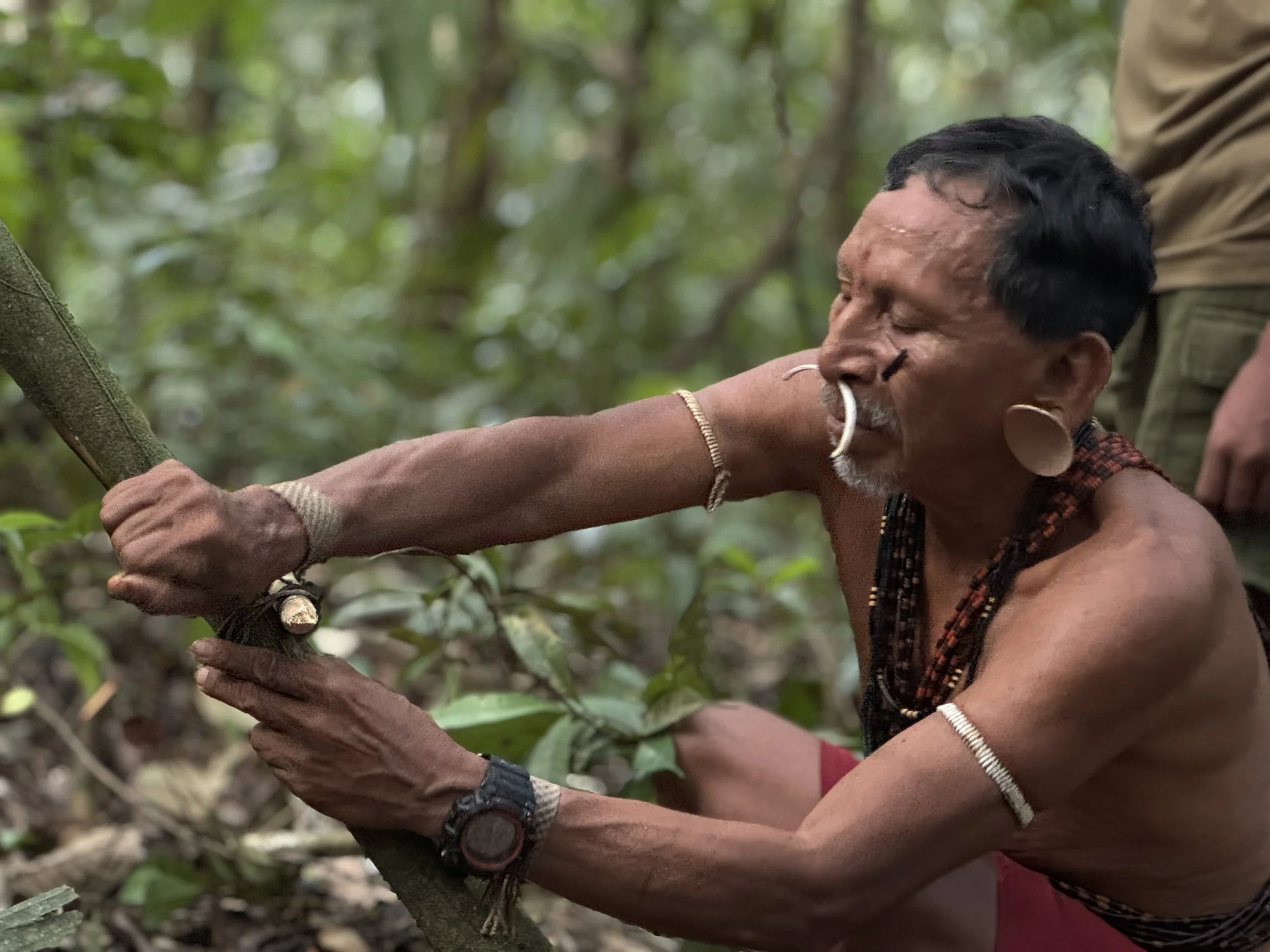
For thousands of years, humans lived among forests intimately. Indigenous peoples developed extraordinary practical knowledge of woodland ecosystems through direct observation and embodied experience. Yet nobody, regardless of closeness to nature, perceived the hidden fungal architectures beneath the soil.
Their discovery required microscopes, isotope tracing, genetic sequencing, controlled experimentation, and the accumulated methods of modern science.
This is profoundly important philosophically.
It demonstrates that reality is not exhausted by human experience of reality.
Bushcraft and folk traditions rightly emphasise immersion, attentiveness, and sensory awareness. But science extends human perception beyond the limits imposed by evolution. We cannot see ultraviolet light, microbial ecologies, or subterranean fungal exchange directly.
Science functions as an expansion of the senses: an organised method for perceiving realities that intuition alone cannot access.
Ironically, the “wood wide web” is often romanticised in mystical language, interpreted as evidence that ancient intuitive understandings of forests were spiritually superior to scientific thinking.
In truth, the opposite is closer to reality.
The deeper understanding emerged not from folklore but from rigorous empirical investigation.
And importantly, the science itself remains cautious. Recent debate within ecology suggests that some popular claims about trees “communicating” altruistically may have been overstated. The fungal networks are real; some anthropomorphic interpretations remain contested.
This distinction matters because it reveals the healthiest possible relationship between bushcraft, herbalism, wilderness living, and science.
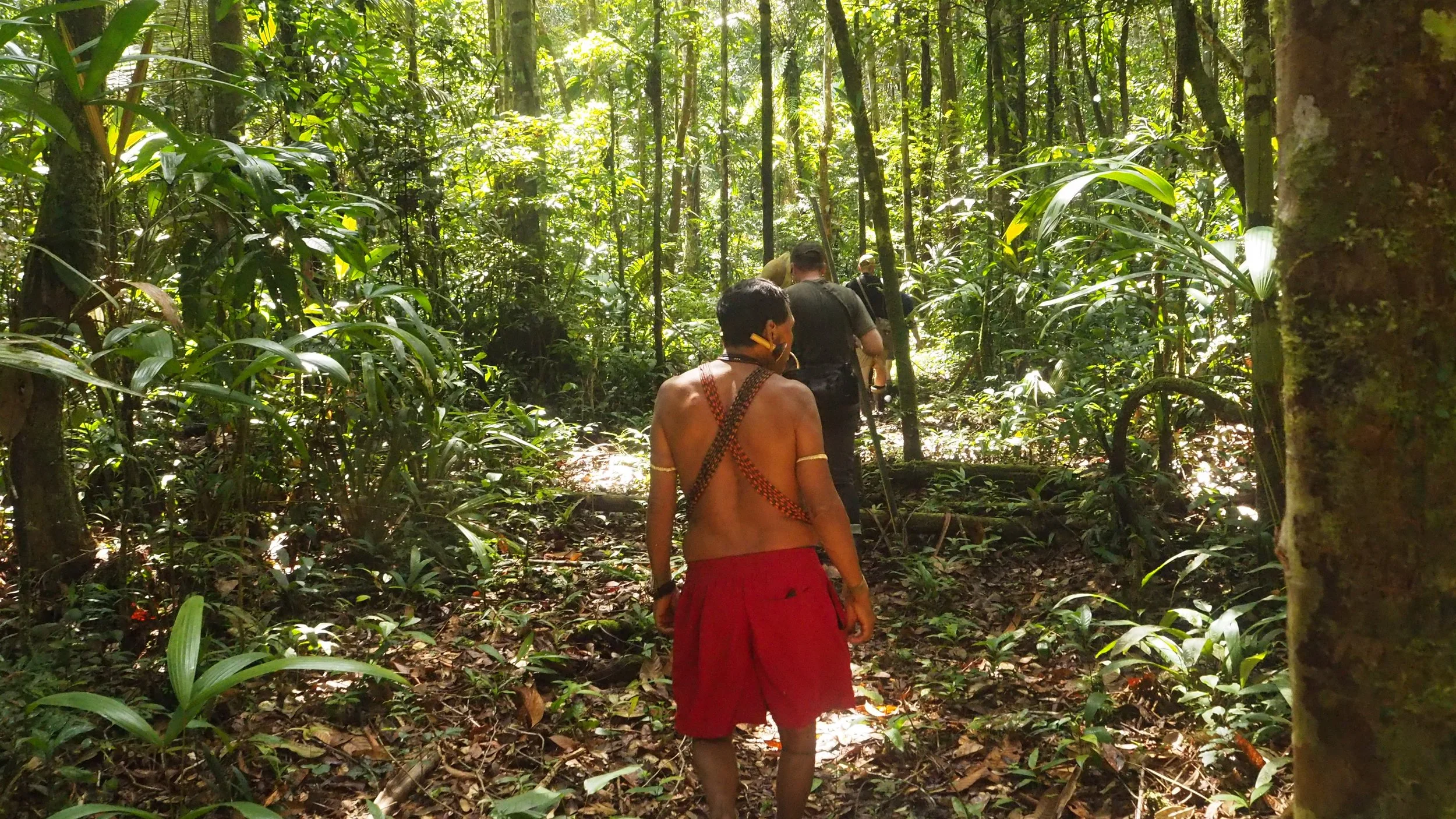
In the Jungle with the Matses
A meaningful connection with nature does not require rejection of scientific rationality.
In fact, scientific enquiry can deepen wonder precisely because it uncovers layers of reality inaccessible to ordinary perception. Understanding fungal ecology, medicinal plant chemistry, animal behaviour, and woodland ecosystems does not diminish the mystery of forests: it reveals how astonishingly intricate they truly are.
A mature relationship with nature therefore requires two complementary forms of attention: the sensory immediacy of lived experience, and the disciplined scepticism of science.
One teaches us how to inhabit the world.
The other teaches us that the world is always larger, stranger, and more complex than human intuition alone can perceive.