wild camping kit load-out - uk hills
I’m fresh back from the Wayfinder Wildcamp course I led in the Lake District this year for Howl and what an incredible experience it was. Teaching navigation with a great group of people as we hike through some of the UK’s most stunning scenery is always a privilege, but on this trip we really did get lucky- not just with the weather but with a genuinely impressive and motivated set of clients.
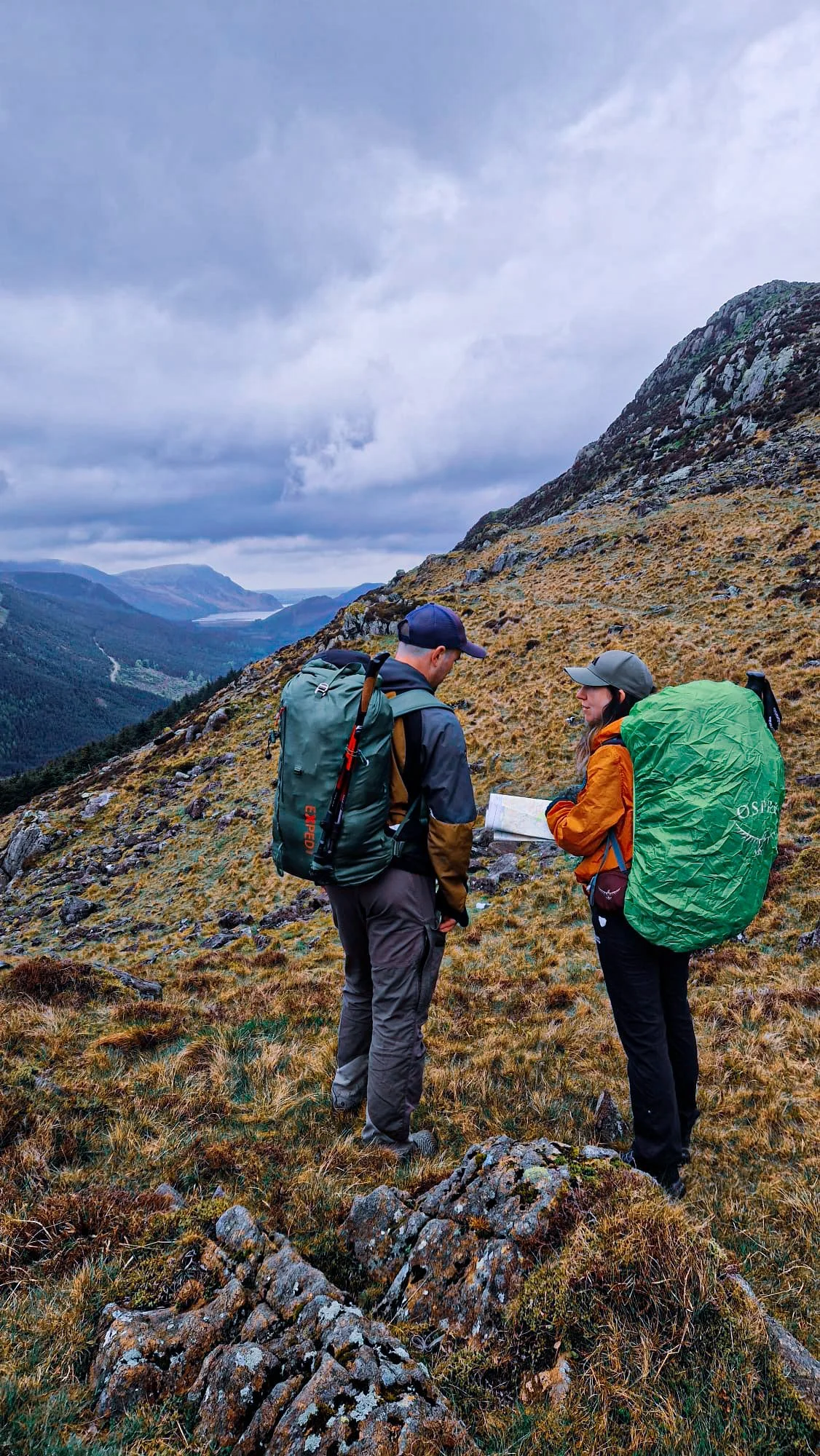
We covered a range of skills in a detailed way, allowing multiple opportunities to try out the techniques across the terrain we covered. Building a solid and robust system for route finding and trailing without the common mistakes that lead people off route, before layering on skills for relocation and contour interpretation.
We also take advantage of wild camping to explore several skills in siting camp, working with nature for shelter before the tent even comes out of the pack. It’s always fun to share tips and tricks for hill camping, and of course I always learn something new with any new group I take out.
One small aspect of the weekend was to look at the equipment we take with us, and this makes for an easy blog post to share in contrast to say the contour skills we did, so I thought I’d lay out what I carried for a four day, 3 night wild camp in the Spring.
Of course we went into some detail during the course about how you might adapt and change what you carry when forecasts and times of year differ, as well as the duration of the journey and shifting terrain.
So, in classic style, here’s what I took:
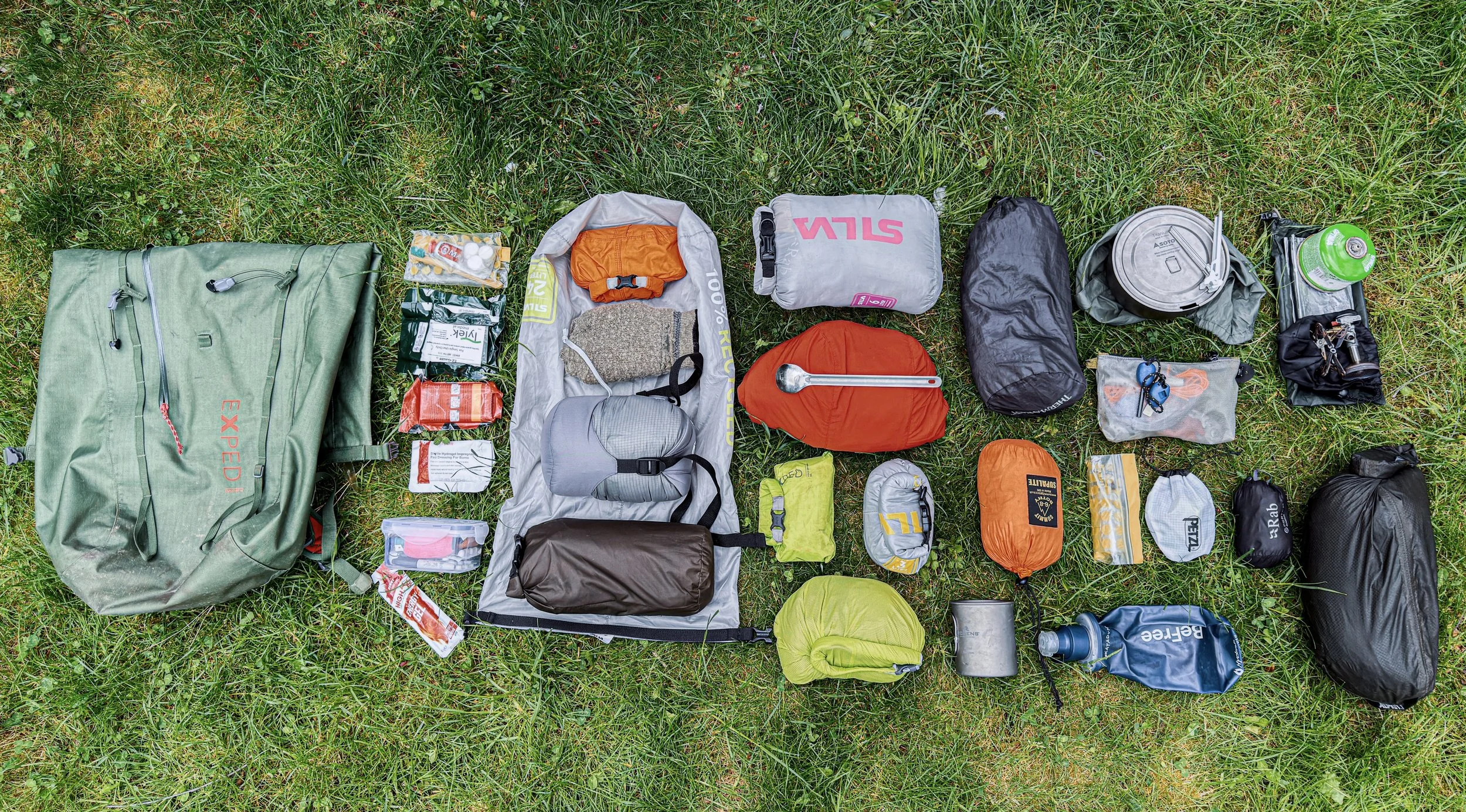
My kit from the recent Wayfinder Wildcamp course. I carried this in the Exped 45ltr rucksack I've had for a couple of years.
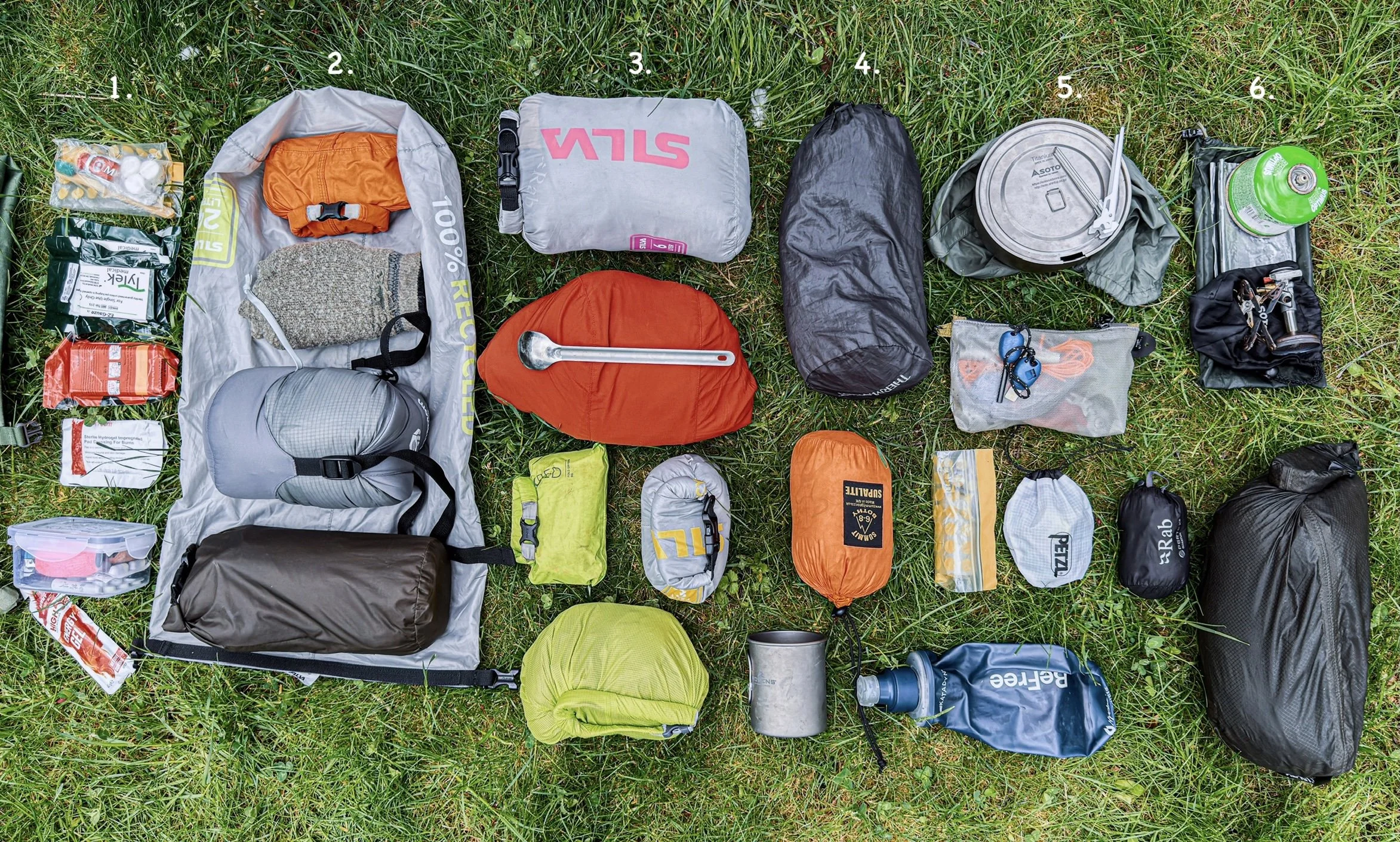
Column 1. Top to Bottom:
Toothbrush, toothpaste, expanding wipes, tiny soap
Tylek gauze x2
Elastic tourniquet/ sling/ multi use
Burn gel dressing L
First aid extras (see photo below)
High glucose gel
Column 2:
Battery pack
Spare wool socks and underwear
Exped Ultra 0C 30F Sleeping bag
Thermarest ¾ length roll mat and Sea to Summit pillow
Column 3:
Rob Down Jacket and Helicon-tex Wolfhound jacket in a waterproof sack
Rab Alphafreak fleece
Spoon
Toilet kit in Green pack and wool hat, gloves and 2x wool buffs in Grey pack
Spare long sleeve merino base layer and long johns
Column 4:
Waterproof overtrousers
6 person bothy bag
Column 5:
Soto titanium pot and spondonacle
Repairs kit and ‘bits’ see below
sun screen in a 100ml bottle
Petzl headtroch
Rab Pertex gloves
Column 6:
Soto Windmaster stove, 100g gas and tinfoil windscreen
Nordisk Telemark 2 LW tent
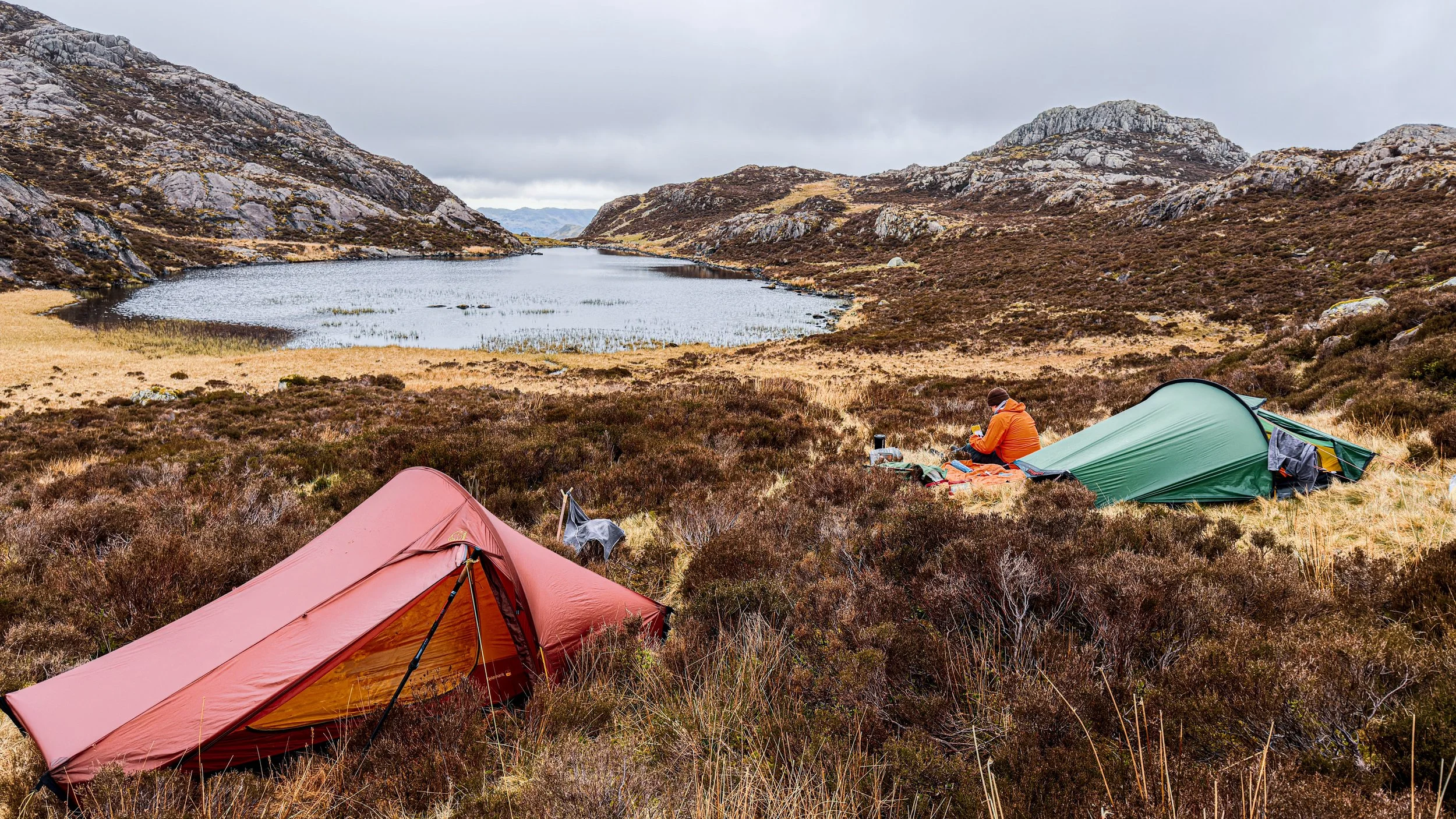
Clearly one of the ways to keep weight and space down is to pack a lightweight tent. This generally means spending a lot more money for a lot ‘less’ tent, a privilege I’m afforded by doing what I do for living. Not without compromise though as it’s certainly not most robust tent in very windy conditions.
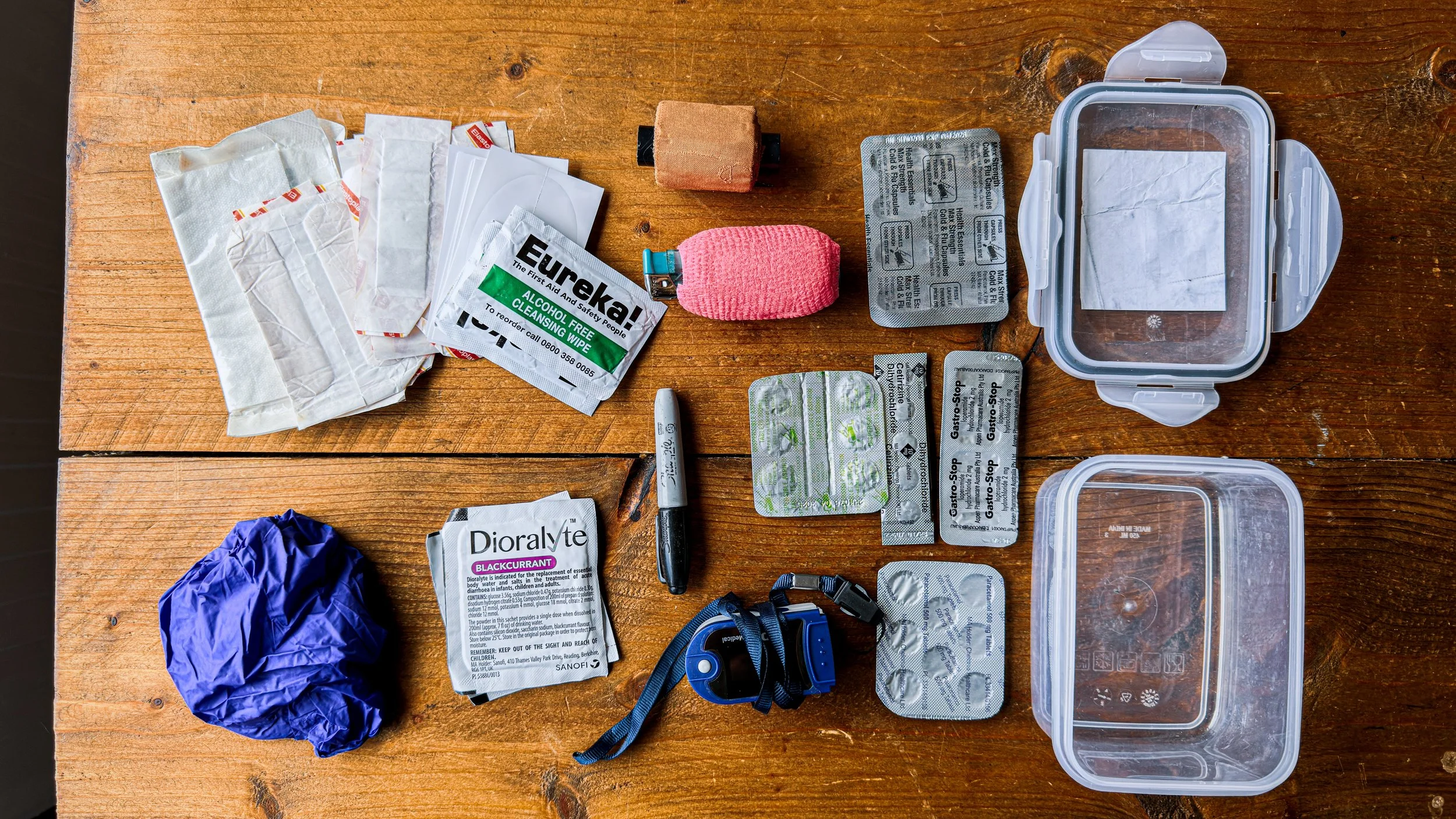
This box is always in my first aid kit, from Jungle to Boreal. I use it to protect the blister packets of tablets and the oximeter. For this trip I stripped it down to a very basic set of items. I like to carry vet wrap (around the lighter) for various applications of binding, and I still like good old fashioned zinc oxide tape for layering over blister plasters etc for feet.
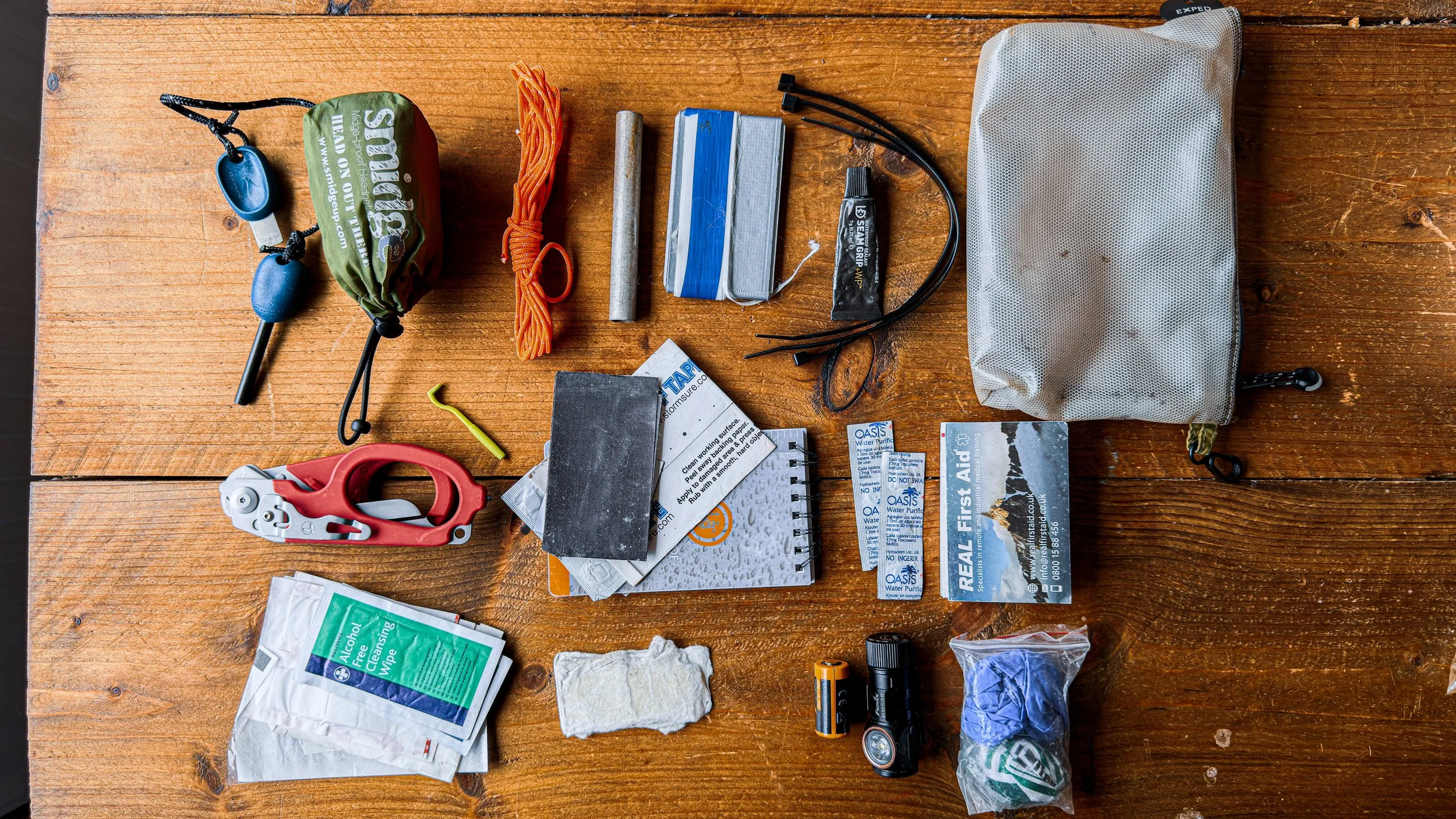
My repair kit and “bits” again stripped out from its usually bulky state when working in the woods to present a hill-effective little kit. Basically stuff to repair tents well enough to get through a couple of nights if needed. So tent pole sleeve tube, duct tape, Forj ribbon, ripstop fabric tape and Stormsure tape. I really like these Exped pouches for kit packs too.
The only things not pictured were my hiking poles, and food.
For this trip I’d brought a Bla Band dehydrated meal per night, Bla Band granola breakfasts (which I decanted into ziplocks). Huel powder, cereal bar, and beef jerky for lunch. I also had a few peanut M and M’s too. A coffee sachet per morning, and a fruit tea bag each night.
The weight came in at 10.5kg on day one, dry and with food.
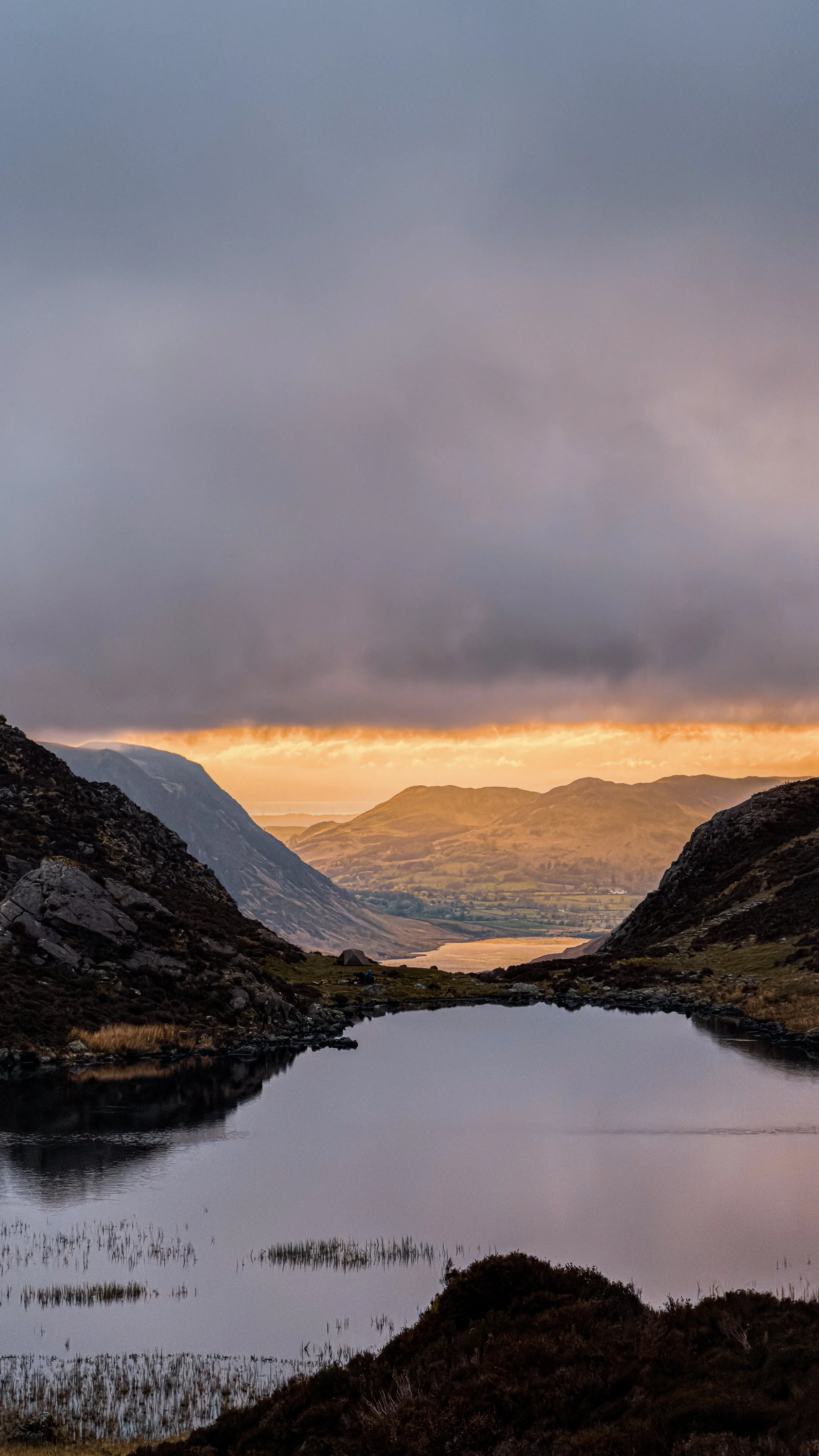
Not an exhaustive list by any stretch of what I might take on every occasion in the hills, but an example of what I carried for this particular trip.
As a general rule I tent to follow this mantra:
If I’m carrying it all the way up that bloody mountain, I’d better definitely be using it once I get there. The only caveat being: I might not use it, but if I needed it and I didn't have it then my discomfort would be such that it wouldn't be worth going up there in the first place i.e. FAK, down jacket etc.
Anyways, that’s it from me for today.
All the best
JD